A Jeep is the easiest vehicle in the world to recognise and one of the hardest to model convincingly. There is no styling to admire, so everything rests on whether the proportions and the grille are right.
Here is how to judge one, using this yellow Rubicon as the example.
Start with the grille
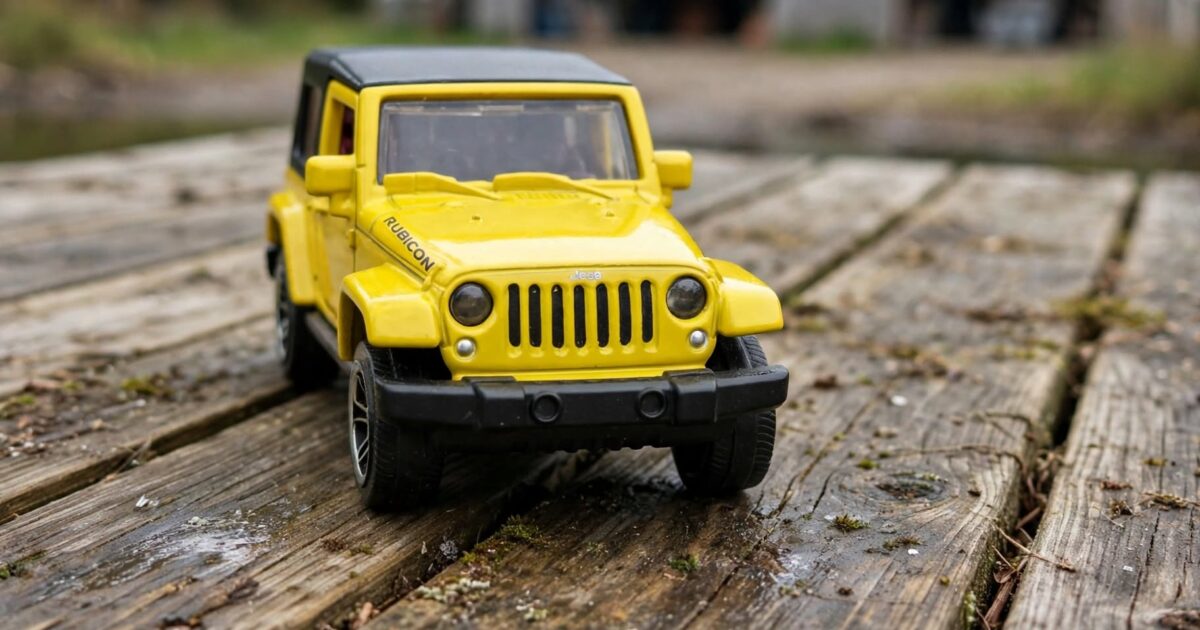
Seven vertical slots, flanked by two round headlights set into the grille panel itself rather than into the wings. That arrangement has been on Jeeps since the 1940s and it is the single most important detail on any Jeep model.
What separates good from bad is depth. The slots need to be actual recesses that catch shadow, not printed lines or shallow ripples. On this casting they are properly cut, and you can see darkness inside them from a normal viewing distance.
The headlights are separate clear pieces with a chrome ring, which is more than most castings at this level bother with.
Then check the stance
A Wrangler sits tall on a short wheelbase with a lot of visible suspension travel. It is not a low vehicle and it should never look like one.
This one is correct. The body sits high above the wheels, the tyres have real tread depth moulded in, and there is an obvious gap between the arch and the tyre that a road car would not have.
That gap is the thing manufacturers most often get wrong. Fill it and the Jeep looks like a hatchback wearing a costume.
The hardtop and the Rubicon markings
The roof is a separate black hardtop, which is the removable panel arrangement that real Wranglers use. Having it in a contrasting colour rather than body coloured is correct.
Along the bonnet side there is RUBICON printed in black, which is where the real vehicle carries it.
Rubicon is the trim level built for serious off-road use, with different axles, gearing and disconnecting anti-roll bars. On a model none of that is visible, so the printed name is doing all the work of telling you which version you have.
The front bumper is a separate black piece with fog light openings, and it protrudes ahead of the body the way a real one does.
Why Jeeps suit Majorette’s approach
Because a Jeep has nothing to exaggerate. The whole appeal is functional correctness, and a brand that specialises in realistic proportions is going to do better with it than one that specialises in lowering things and fitting big wheels.
A lowered Wrangler is an absurd object. It exists, manufacturers make it, and it defeats the entire point of the vehicle.
This one is left alone, which is the correct treatment and a slightly boring one to write about. That is the trade with realistic brands.
Wrangler generations and telling them apart
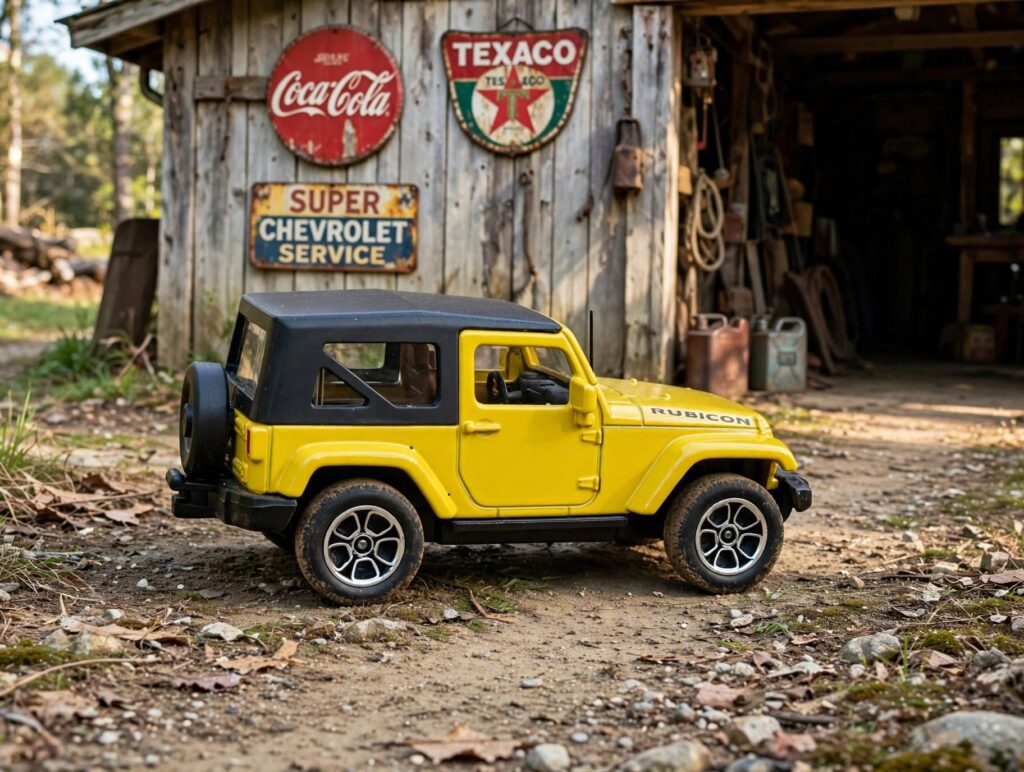
Wranglers look similar across decades and the differences are learnable in a minute.
The headlight surrounds are the quickest check. Earlier generations had round lights sitting in round openings cut into the grille panel. Later ones kept the round lights but changed the surrounding panel shape and the fender profile around them.
The windscreen angle is the second check, since it has been progressively raked back over the years from the near vertical screen of the earliest Jeeps.
The third is the door shape and whether the model has two doors or four, since the long wheelbase version is a relatively recent addition.
Sellers use CJ, YJ, TJ and JK interchangeably and often wrongly, so read the grille and the screen rather than the description.
Buying a loose Wrangler
The grille slots collect dust and damage, because they are deep recesses at the front of a vehicle with no overhang protecting them. Look into them under light.
Then the front bumper, which is separate, protruding and low despite the tall body.
Then the hardtop, which is a separate piece and can be scuffed or in bad cases loose.
Yellow paint shows dirt more than damage. A grubby looking Jeep in photos is often fine, so ask for a clean shot rather than assuming.
Check the tyres too. Off-road tread hides a wobble that would be obvious on low profile wheels, so roll it and watch carefully.
Off-road vehicles in a collection
Most collections are made of road cars, and adding a genuine off-roader changes the character of a shelf more than another sports car would.
It also works well in a diorama, because a Jeep suggests somewhere that is not a street. Photographed on dirt or gravel it reads correctly, and photographed on a garage floor it looks like it is waiting for something. Our diorama guide covers building surfaces for that.
So is it a good Jeep casting?
Yes, on the three tests that matter: deep grille slots, correct tall stance, and a separate hardtop in a contrasting colour. Restrained to the point of being unexciting, which for this vehicle is exactly right. Check the grille and the bumper before you pay.