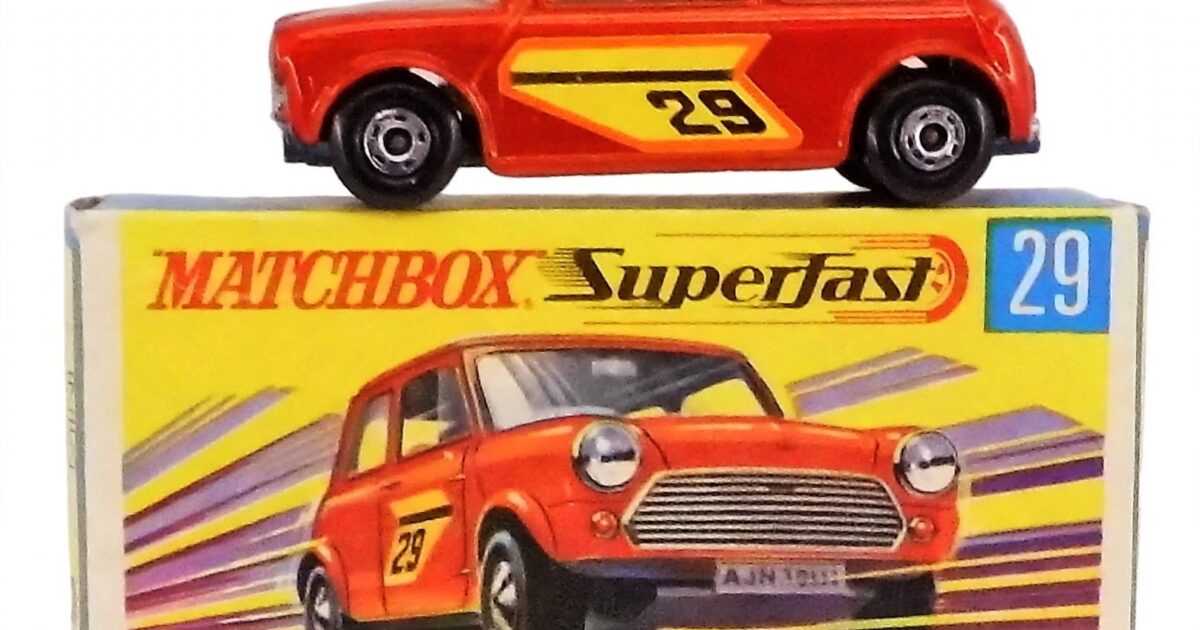
Matchbox is the brand people inherit rather than buy. A box turns up in a garage, somebody mentions that old toy cars are worth money, and suddenly you need to know what you are holding.
Here is what actually matters when you are looking at them.
Where Matchbox came from
Lesney Products was founded on 19 January 1947 by Leslie Smith and Rodney Smith, who were not related. The name came from combining theirs: Les from Leslie, ney from Rodney.
It was an industrial die-casting business, not a toy company. Toys came later, as something to do with spare factory capacity when industrial orders went quiet.
The third name matters more than either of them. Rodney introduced his partner to Jack Odell, an engineer he had worked with at another die-casting firm. Odell started out renting space inside the Lesney building for his own work and became a partner the same year.
The matchbox story, and why it is disputed
Here is the version everybody repeats: Odell’s daughter Annie went to a school that only allowed toys small enough to fit inside a matchbox, so he made her a scaled-down version of the Lesney road roller.
That is the official origin, and it is where the brand name comes from.
It is also questioned. Nick Jones, in his book on Matchbox, disputes the school rule entirely. So the story you will read on every other website is probably a tidied-up version of something messier.
I include it because the name genuinely did come from the packaging, and because knowing a famous story is contested is more useful than repeating it as fact.
The irony nobody mentions
Rodney Smith left the company in 1951. He saw no future in it.
Matchbox launched roughly two years later and became one of the most successful toy brands in British history.
Half the brand’s name belongs to a man who walked away before it existed.
What makes a Matchbox collectible
Four things, and they work the same way as in any die-cast collecting.
Age. Lesney-era cars, made in England before the company’s collapse in the early eighties, are the ones collectors chase. After that, production moved and the character changed.
Condition. A clean car with sharp paint and intact decals is worth multiples of a played-with one. This matters more with Matchbox than with Hot Wheels because Matchbox cars were made to be realistic, and chipped realism just looks damaged.
The box. Early models came in printed cardboard boxes, and the box is often worth more than the car. A mint car in a crushed box is a different proposition from a mint car in a clean one.
Wheels. More on this below, because it is the detail that separates eras.
Regular wheels and Superfast
The single most useful thing to learn about Matchbox.
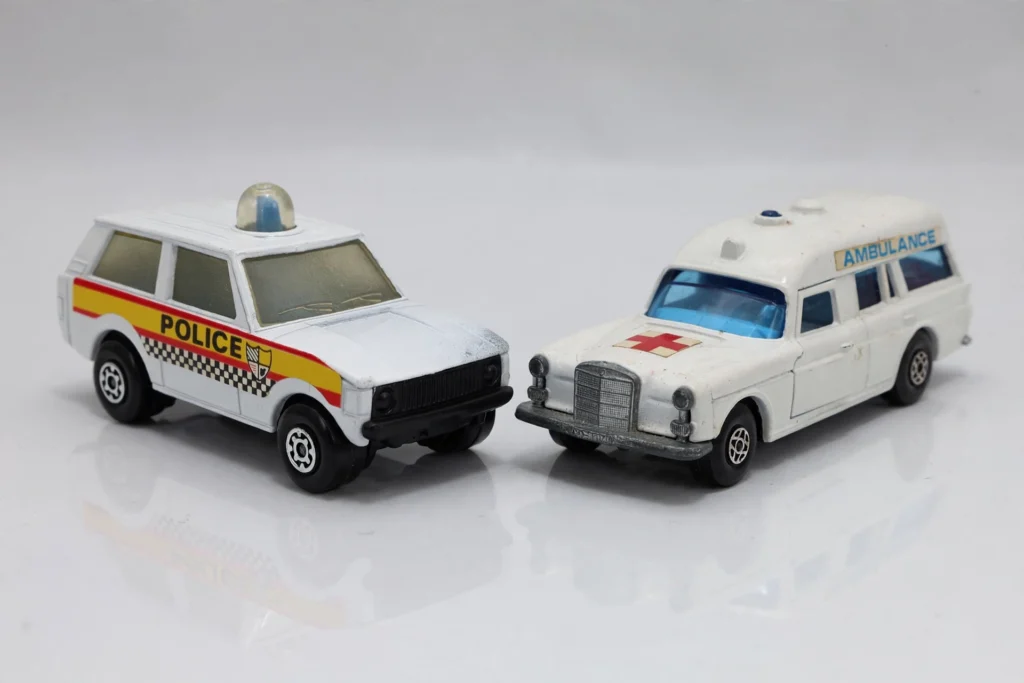
Early cars ran what collectors call regular wheels: small, often metal or plain plastic, designed to look correct rather than to roll fast.
In 1969 Matchbox answered Hot Wheels with the Superfast line, fitting low-friction wheels on thinner axles. The cars got faster and the look changed completely.
So if you are holding a Matchbox and want to place it roughly in time, look at the wheels first. Fine, realistic, slow-looking wheels mean pre-1969. Wider, flashier wheels mean Superfast or later.
That one check does more dating work than anything else on the car.
The 1-75 series and why numbering helps
Matchbox organised its main range as a numbered series, which is unusual and very helpful for collectors.
Each casting had a number, and when a model was retired its number was reused for something new. That is why you see references like No. 1 applying to different vehicles across decades.
For a collector it means you can build a run by number rather than by subject, which is a constraint that keeps a collection focused. Our beginner’s guide covers why picking a constraint early saves money.
What Matchbox does that Hot Wheels does not
Realism, and specifically the vehicles nobody else bothers with.
Matchbox makes vans, trucks, emergency vehicles, construction equipment and ordinary working cars at correct ride heights with correctly sized wheels. Our review of the Matchbox ’57 GMC Stepside in Canon Construction livery shows what that approach delivers.
That makes Matchbox the natural choice if you build dioramas, because a scene needs vehicles that look like they have a job. Our diorama guide covers putting one together.
For a direct comparison of the two brands, Matchbox versus Hot Wheels goes through the differences properly.
Starting a Matchbox collection today
Buy loose and buy common while you are learning. Lesney-era cars in played condition cost very little and teach you what the paint, the wheels and the baseplates look like.
Once you can date a car from the wheels and read a baseplate, then start looking at boxed examples, because by then you will know what you are paying for.
Avoid the trap of chasing value first. Most Matchbox cars are worth a few dollars and the ones that are not are well documented, so if something seems valuable, it is easy to check before buying.
Frequently asked questions
Who invented Matchbox cars?
Lesney Products, founded by Leslie Smith and Rodney Smith in 1947. The small-scale toy that led to the Matchbox range was designed by their partner Jack Odell.
Why are they called Matchbox cars?
The models were sold in small printed boxes modelled on matchboxes. The story that the size came from a school rule is widely repeated but has been disputed by researchers.
What is the difference between regular wheels and Superfast?
Regular wheels are the earlier, realistic, slower-rolling design. Superfast arrived in 1969 with low-friction wheels to compete with Hot Wheels.
Are old Matchbox cars worth money?
Some are. Lesney-era models in excellent condition with their original boxes command the highest prices. Played-with examples of common castings are worth very little.
Is Matchbox the same company as Hot Wheels?
Mattel owns both brands today, but they began as competitors and are still run as separate lines with different design philosophies.