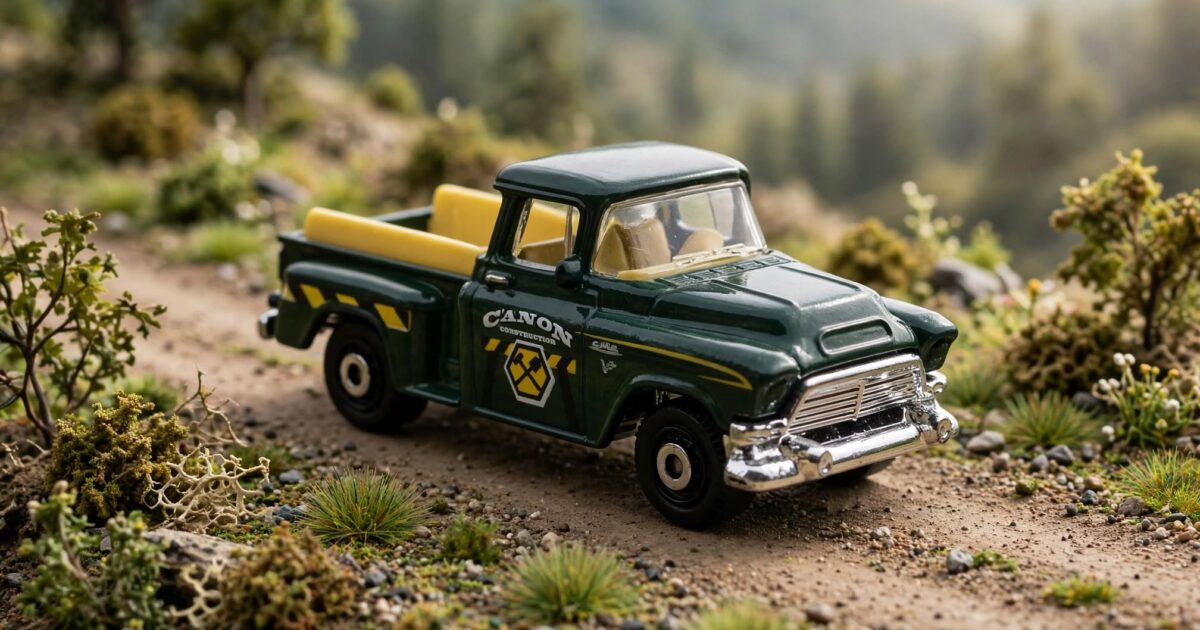
If you want the difference between Matchbox and Hot Wheels explained without a paragraph of theory, put this truck on a table. Dark green GMC stepside, chrome bumper, steel wheels with white rings, a construction company logo on the door and two yellow pipes sitting in the bed.
No blower. No flames. No rear tyres the size of dinner plates. It is a truck that turned up to do a job, and Matchbox has been quietly making vehicles like this for sixty years because a real audience wants them.
Matchbox versus Hot Wheels on trucks
Hot Wheels designs vehicles you imagine driving fast. Matchbox designs vehicles you imagine parked outside a site at seven in the morning with the engine running and someone drinking coffee in the cab.
That difference shows up in the geometry. Ride height is realistic. The wheels are the right diameter for the body instead of being pushed up a size for drama. The stance is level with no rake. Nothing has been exaggerated.
The result belongs in a diorama and looks slightly lost on an orange track, which is the point. Collectors who build scenes tend to drift toward Matchbox over the years for exactly this reason, and I am one of them.
The Canon Construction livery
The deco is the best thing here. The door carries a Canon Construction logo, crossed hammers inside a yellow hexagon, with the company name above it in a period typeface. A thin yellow pinstripe runs along the hood and down the bed side. The rear corner of the bed has yellow and black hazard chevrons, the sort you find on the back of an actual work vehicle.
It reads as a fleet livery instead of a toy colour scheme, and that is a harder thing to pull off than people assume.
The load in the bed: good idea or not?
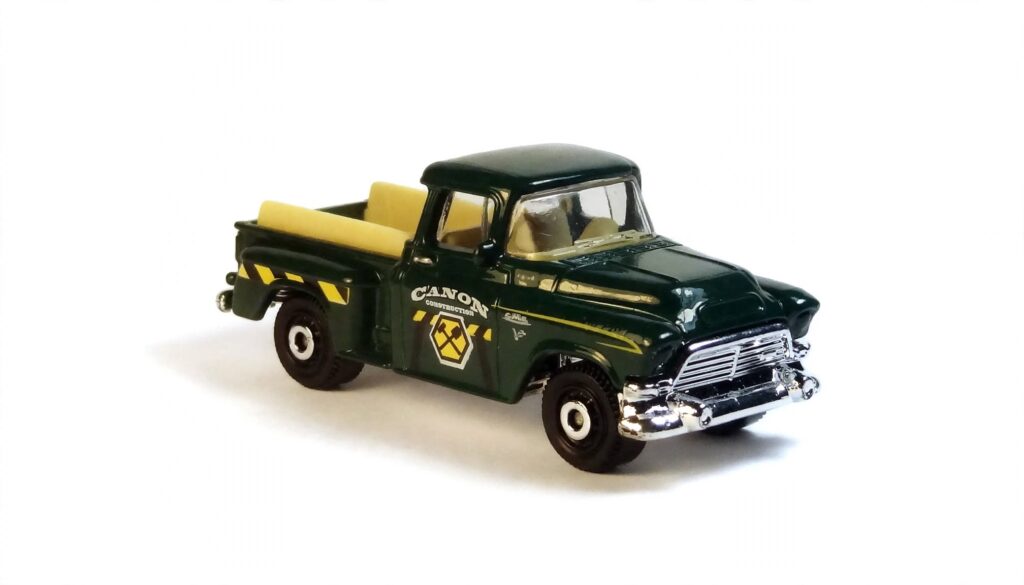
Two yellow cylindrical pipes sit in the bed as a separate moulded piece. I am genuinely split on this.
In its favour: the truck instantly reads as a working vehicle in photographs, and it gives you a story without any effort. It has arrived to deliver something.
Against: the bed is now permanently occupied. You cannot use this truck as a generic pickup in a scene, and you cannot load it with your own bits. If you build dioramas seriously that is a real limitation, and it is the reason I would still like an empty version of the same casting.
Chrome, glass and the two tone paint
The front end carries the casting. The GMC grille is a fine horizontal bar pattern in proper chrome instead of silver paint, and the front bumper is a separate chrome piece with visible bumper guards. Headlight surrounds are picked out. The hood has the correct centre crease running back from the nose.
The cab glazing is clear, which matters more here than on a low sports car. The cab is upright and tall, so you actually see through it to a tan interior with a bench seat. Tint would have thrown all of that away.
One flaw on mine: a small chip on the leading edge of the black roof. Two tone paint goes on in separate passes and the transition edge is where chipping starts. Check it on any loose example.
Who should buy this Matchbox pickup
Diorama builders, without hesitation. This is one of the most useful vehicles you can own for an industrial, rural or period street scene, and the green and yellow works against almost any background.
If you only collect performance cars, it will do nothing for you. That is fine. Matchbox has never pretended to be selling you a race car.
Buying a loose GMC stepside
Chrome first. The separate pieces bend. Look at the front bumper straight on and check it is square to the body.
Then confirm the load is still there and has not been snapped out, because a missing load turns this into a much duller truck and there is no replacing it. Then run along the two tone edge where black meets green. Then the door logo for tampo wear.
Last, the wheels. The steel look wheels with white rings are specific to this release and mismatched replacements stand out once you know the correct ones.
Putting it in a scene
This truck wants context. On its own on a shelf it is a small green pickup. Park it beside a low building on a gravel lot with a couple of figures and some scattered material and it stops being a toy and starts being a moment.
What to park next to it
This truck improves when it has company doing the same kind of work. A period fire vehicle, a tow truck, a flatbed, anything with a fleet livery and a job.
What kills it is putting it beside modified performance cars. The GMC is built to a realistic ride height with correctly sized wheels, so next to a slammed car on oversized rims it reads as small and plain instead of as honest.
Matchbox has produced enough period commercial vehicles over the years that assembling a small working fleet is easy and cheap. Half a shelf of trucks in different liveries from the same era looks considered, and it costs less than a single premium car with rubber tyres. That trade has always seemed obvious to me and most collectors go the other way.
Verdict
Quiet, small, and very well made. It will never be the exciting car in a case and it does not want to be. The fleet livery is one of the better jobs Matchbox has done on a period truck, and if you build scenes it will earn its keep for years. Just make sure the pipes are still in the bed.