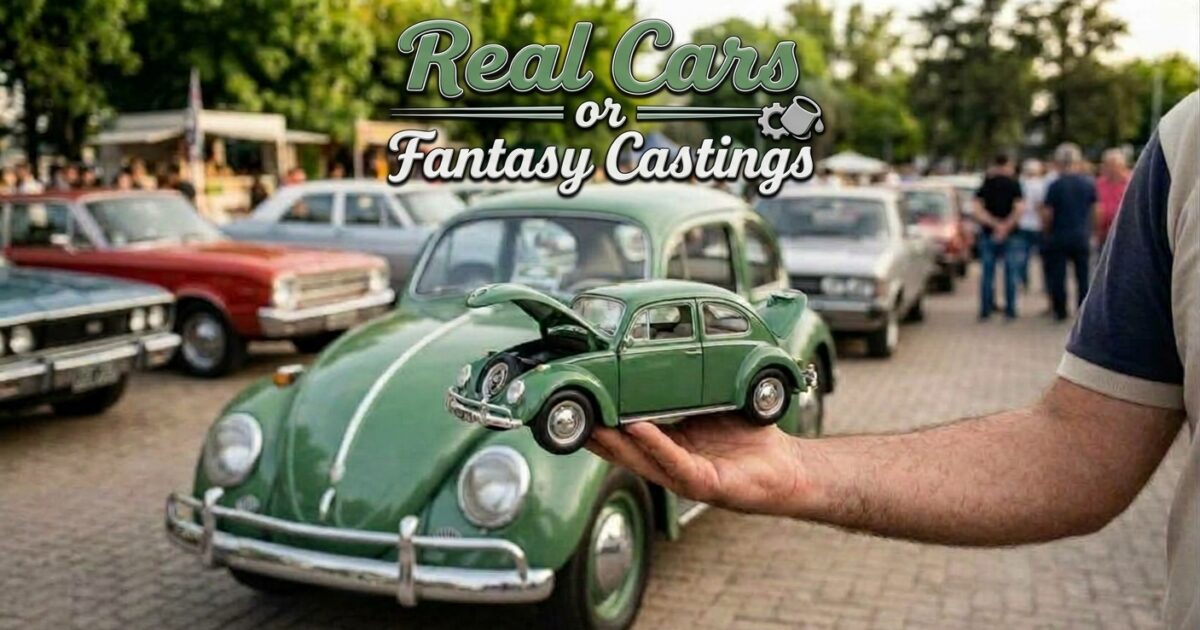
Somebody lists a car as a rare 1970s prototype and asks fifty dollars for it. The car never existed. It was designed at Mattel, it has no real-world counterpart, and there is nothing to research because there is nothing to research.
Knowing which category a casting falls into protects you from that, and it also changes how you collect.
The two categories
Licensed castings reproduce vehicles that exist. Mattel pays a manufacturer for the right to use the shape and the badges, which is why a Ferrari casting carries a Ferrari badge and a generic wedge does not.
Hot Wheels originals, often called fantasy castings, are designed in-house. No real car, no licence, no reference photographs. Some are plausible road cars, some are clearly impossible, and a few have been built as full-size show cars afterwards.
Both have been part of the range since 1968. The original sixteen cars included licensed production vehicles alongside in-house designs, and that mix has continued ever since.
Why the distinction matters when buying
Three reasons, and the first is money.
A seller who does not know the difference will describe a fantasy casting using real car language, because it sounds better. Concept car, prototype and rare production model get applied to things that were never any of those.
The second is research. If a casting is licensed you can look up the real vehicle, check the details against reference photos and judge whether the model is accurate. With a fantasy casting there is nothing to check it against.
The third is display. A shelf built around real cars tells a story about automotive history. A shelf of fantasy castings tells a story about toy design. Mixing them without deciding leaves you with neither.
How to identify a licensed casting
Four tests, in order of reliability.
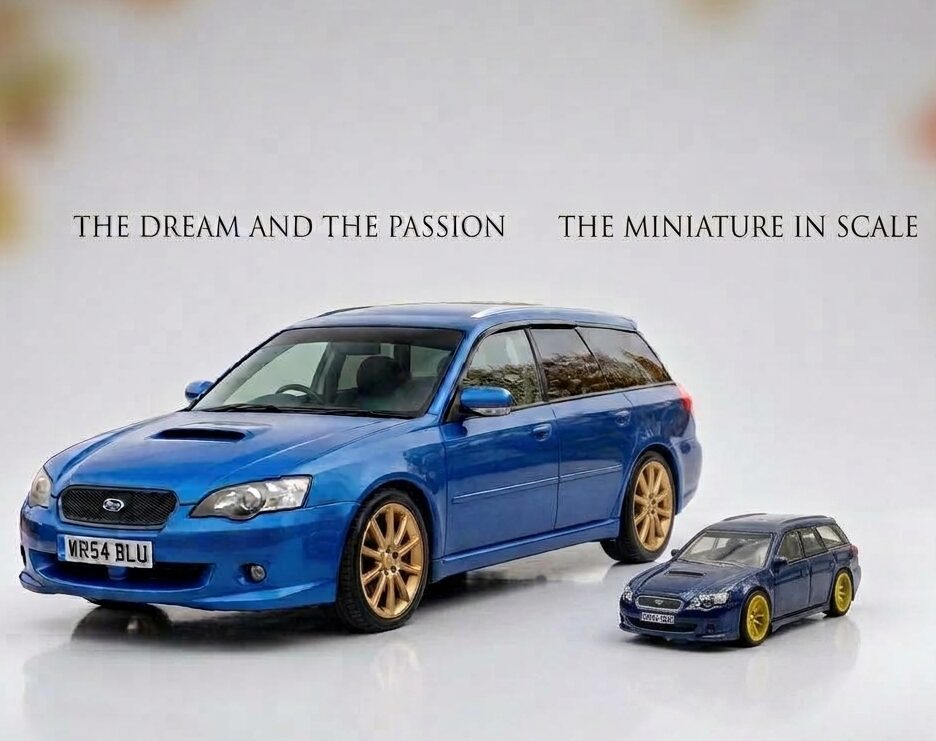
The badge. Licensed cars carry a correctly proportioned manufacturer badge in the right place. Fantasy cars carry a Hot Wheels logo and nothing else.
The base. Licensed castings usually print the manufacturer name alongside the model name and year. A base that reads ’69 Dodge Charger is licensed. A base with only a Hot Wheels name is not.
The grille. Manufacturers are protective of their brand face and reject castings that get it wrong, so a licensed car has a recognisable grille treatment.
The name itself. Licensed names include a year, a manufacturer and a model. Fantasy names are invented and tend to be a single evocative word.
The grey area: concepts and show cars
This is where the clean distinction breaks down, and it catches experienced collectors too.
Manufacturer concept cars are real in the sense that a physical vehicle exists, usually one, built for a motor show and then parked in a corporate collection. They are licensed, they carry real badges, and they never reached production.
Our review of the Ford Shelby Cobra Concept covers one of those: a genuine Ford show car that Mattel reproduced and that Ford never built.
There are also Hot Wheels originals that were later constructed as full-size vehicles for shows and events. Those start as fantasy and become real, which is the opposite direction and just as confusing in a listing.
Why fantasy castings exist at all
Licensing costs money and takes time. Every licensed casting requires negotiation, approval of the design and a share of revenue.
An in-house design avoids all of that. Mattel can put a car into production faster, modify it freely, and release it in any colour without asking anyone.
There is also a creative argument. A designer working on a licensed Mustang has to produce something that reads as a Mustang. A designer working on an original has no constraints at all, and some of the most inventive shapes in the range came out of that freedom.
Collecting one, the other, or both
I keep them separated on the shelf rather than mixed, and the reason is contrast.
A row of real cars invites comparison with each other: this is how Ford solved it, this is how Chevrolet did. That comparison stops working the moment something invented sits in the middle of it.
A group of fantasy castings works differently. There is no reality to measure against, so what you are looking at is pure design, and the wilder ones look better together than they do scattered among realistic cars.
If you are building a themed shelf, our beginner’s guide covers how to pick a constraint early.
What this means for value
Licensed castings of famous cars tend to hold value better, because demand comes from two directions: diecast collectors and people who own or love the real car.
A fantasy casting only has the first audience. There is no Mustang owner looking for a model of their car, because the car does not exist.
That said, a handful of early Hot Wheels originals from the Redline era are among the most valuable things in the hobby, so the rule is about tendency rather than certainty. Our guide to Hot Wheels as an investment goes into why scarcity beats category every time.
Frequently asked questions
Are all Hot Wheels based on real cars?
No. Roughly half the range is licensed from real manufacturers and the rest are designed in-house with no real-world counterpart.
How can I tell if a Hot Wheels is a real car?
Check the base for a manufacturer name and model year, and look for a correctly placed brand badge on the body.
What is a Hot Wheels original?
A casting designed by Mattel with no real vehicle behind it. Some have been built as full-size show cars afterwards, but the model came first.
Are fantasy castings worth collecting?
Yes, as design objects. They tend to hold less value than licensed cars because the audience is smaller, with the exception of scarce early releases.
Is a concept car the same as a fantasy casting?
No. A concept car is a real vehicle built by a manufacturer and shown publicly, so the casting is licensed even though the car never reached production.