Some rare Hot Wheels sell for the price of a real car, so the question is fair: are Hot Wheels a good investment, or just a fun way to spend a few dollars on a Saturday? Here is an honest answer from someone who collects them, not from someone selling a course on flipping them.
For most people, the short answer is no. Hot Wheels are not a reliable investment. A tiny number have made someone real money, and that is exactly why the question keeps coming up. Treat a wall of blister packs like a savings account and you will probably be disappointed. But the value side is not a myth either. A small slice of the hobby is genuinely worth money, so it is worth knowing which cars, and why, before you spend.
What makes a Hot Wheels valuable?
Four things do most of the work, and they usually team up.
- Scarcity: low production runs, store or region exclusives, and chase cars like Treasure Hunts. Fewer made, higher demand.
- Condition: a car still sealed on a clean, sharp-cornered card is worth far more than the same casting loose and played with.
- Era: the oldest cars carry most of the high-end value, and the Redline years lead the pack.
- Errors and prototypes: wrong colors, missing tampo, or raw unpainted test cars. They were never meant to exist, so collectors pay up.
How to tell if a Hot Wheels is worth money
You can size up most cars in under a minute if you know what to look at.
- Check the tires. A red stripe, or Redline, means the car is from 1968 to 1977, the most collectible era.
- Look for Spectraflame paint, the deep candy-metallic finish used on the early cars.
- Read the base. The country, the year, and any prototype or raw ZAMAC markings all matter.
- Look for the small flame logo of a Treasure Hunt, or the TH logo and rubber Real Rider tires of a Super.
- Judge condition honestly. Sealed and mint beats loose and scuffed every single time.
When you are unsure, check completed eBay sales for the exact car, not the asking prices. What people actually paid is the only number that means anything.
Which Hot Wheels are actually worth money?
When people picture valuable Hot Wheels, they are usually picturing a narrow slice of the hobby. Here is what really moves for serious money.
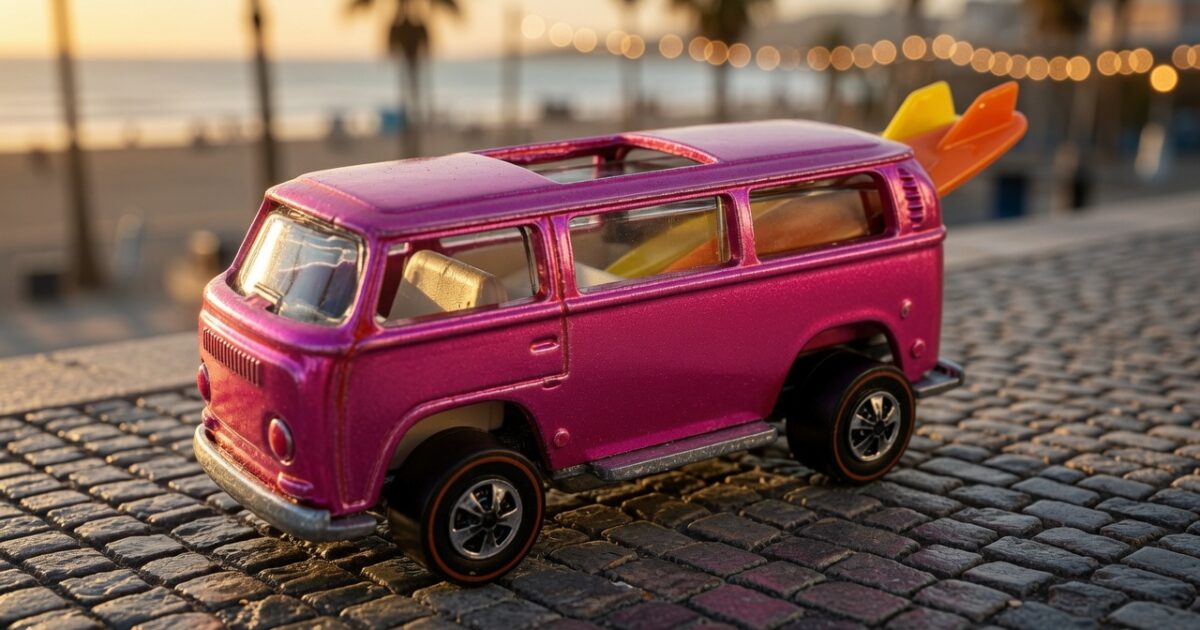
- The pink rear-loading Volkswagen Beach Bomb: the undisputed holy grail. It is a prototype with fewer than a dozen known to exist, and it has reportedly changed hands for figures approaching 175,000 dollars.
- Redline-era cars from 1968 to 1977: the original 1968 lineup collectors call the Sweet 16, led by the Custom Camaro. Common redlines run 20 to 100 dollars, while the rarer ones climb into the thousands.
- Modern chase cars: Super Treasure Hunts and Red Line Club (RLC) exclusives, often 20 to a few hundred dollars, and more for special anniversary sets.
- Genuine error cars: real factory mistakes that slipped past quality control and out the door.
Notice what is not on that list: the everyday dollar mainline hanging on the peg. Those are a joy to collect and almost never an investment.
Do Hot Wheels go up in value over time?
Some do. Most do not. The cars that appreciate are the ones that were scarce, well kept and genuinely wanted, and that is a small fraction of everything Mattel makes. A common mainline you buy today will very likely be worth about the same, or a little less, in ten years. Mattel also keeps reissuing popular old castings, which quietly holds down the value of the originals. Time alone does not make a Hot Wheels valuable. Scarcity plus demand does.
Are new Hot Wheels a good investment?
This is where hopes get high. Modern Super Treasure Hunts and RLC cars are the best of the current crop, and a few do climb in value soon after release. But you are competing with thousands of other collectors and resellers doing the exact same thing, so the easy gains are mostly gone by the time you hear about them. Buy a new car because you like it, and treat any appreciation as a bonus rather than a plan. If you are still learning the difference between the chase cars, our guide to Treasure Hunts vs Super Treasure Hunts breaks it down.
The real risks of investing in Hot Wheels
The videos promising easy money never dwell on this part, so let us.
- No price index: they are hard to value and easy to overpay for.
- Illiquidity: when you want to cash out, finding the right buyer at your price can take months.
- Fakes and repaints: a repaint sold as a factory original can cost you real money.
- Storage and condition: cases, humidity control and space all eat into any profit.
- Reissues: Mattel remakes popular castings, softening the value of the originals.
- Fees and taxes: selling fees and, depending on where you live, tax on any profit.
- Fads: this year’s must-have casting can be next year’s peg-warmer.
Where to sell valuable Hot Wheels
If you do end up with something worth real money, sell it where the right buyers are. Completed eBay listings show you the going rate, and eBay itself works well for most cars. For genuinely rare, high-value pieces, specialist auction houses reach serious collectors. For mid-range cars, local collector groups and toy shows let you skip shipping and fees. Wherever you sell, clear photos and an honest description of condition get you the best result.
So, should you invest in Hot Wheels?
Collect because you love it, and treat any money you make as a happy accident. Buy what you actually like, in the best condition you can reasonably afford, and never buy a car you would be unhappy to simply own. The people who enjoy this hobby for decades are almost never the ones chasing profit, which, funnily enough, is also the mindset that occasionally ends up owning something valuable.
Frequently asked questions
Do old Hot Wheels increase in value?
Some do, especially Redline-era cars from 1968 to 1977 in good condition. Plenty of common models, though, stay affordable no matter how old they get.
What is the most valuable Hot Wheels car?
The 1969 pink rear-loading Volkswagen Beach Bomb, a prototype valued in the six figures, with fewer than a dozen known to exist.
Should I keep Hot Wheels in the package to keep their value?
For resale value, yes, a sealed card is worth more. If you collect to enjoy them, open them and have fun. You cannot fully do both with the same car.
Are Hot Wheels a better investment than stocks?
No. They are illiquid, pay no dividends, and have no reliable price index. Think of them as a hobby that sometimes rewards you, not a portfolio.
Are Hot Wheels worth collecting?
Absolutely, for the fun of it. As a pure money play they are risky, but as a hobby they are one of the most affordable and rewarding around.
New to the hobby? Start with our beginner’s guide to collecting diecast cars, and browse more Hot Wheels coverage for castings worth chasing.
1 Comment
Comments are closed.