The Mk1 Escort is a small square box that Ford sold to families who needed to get to work. It also happens to be one of the most successful rally cars ever built.
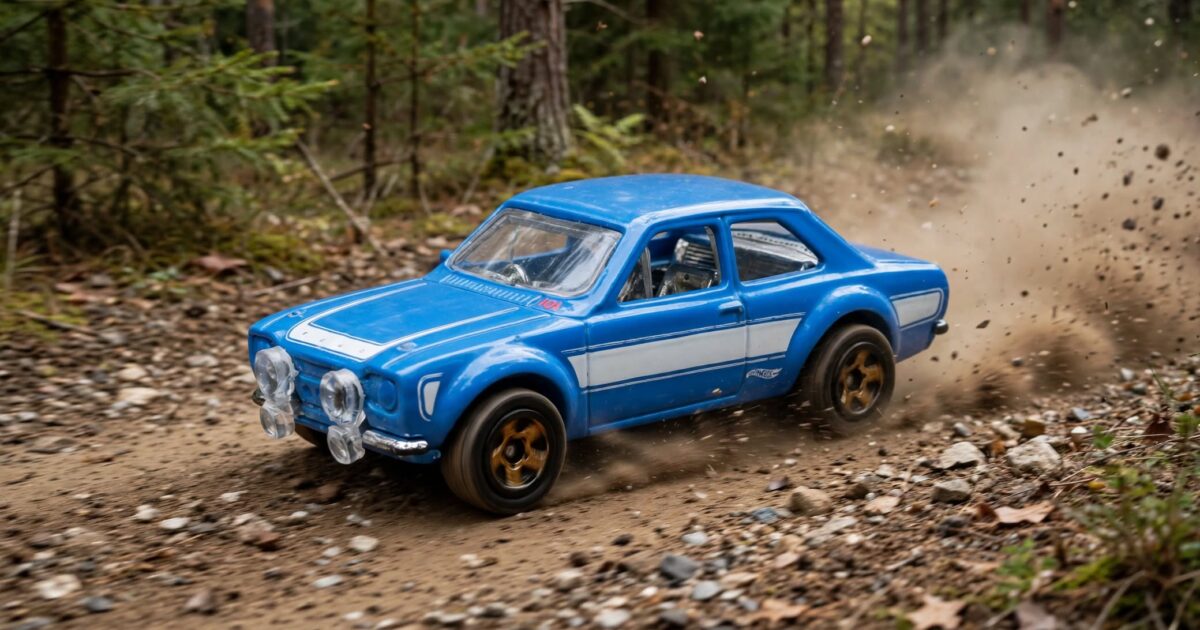
Mattel made a casting of it, painted it blue with white stripes, and hung four clear rally lamps off the front bumper. It is one of the quieter pleasures in the mainline range, and I would take it over most of the supercars.
What the RS1600 actually was
The homologation version, built so Ford could go rallying with a sixteen valve engine. It won on gravel, on tarmac and on everything in between through the 1970s, using a bodyshell designed as a cheap family car.
That gap between the humble shape and what it did is the entire appeal. Nothing about the car looks special until you know.
Why homologation cars make good diecast
Every odd detail on this body has a reason behind it. The flared arches exist because the rally cars needed wider wheels. The extra lamps exist because rallies run at night. The matte bonnet exists to cut glare into the driver’s eyes.
Racing rulebooks forced manufacturers to sell a minimum number of road cars closely related to their competition machinery, and that produced a run of strange, compromised, brilliant vehicles built to satisfy regulations instead of customers.
Once you know why the details are there, an ordinary looking saloon becomes far more interesting on a shelf than something that merely looks fast. That is my favourite thing about collecting this corner of the hobby.
The clear rally lamps
Four lamps on the front bumper, and they are a separate transparent plastic piece instead of moulded body detail. That costs Mattel money and it shows: the lamps catch light and read as glass, and the whole nose gains depth.
They are also the most fragile thing on the car by a distance. Separate plastic parts hanging off the front bumper of a small toy do not survive contact with the world, and this is the single most important thing to inspect if you buy loose. A broken lamp cluster changes the character of the car completely and you are not replacing it properly.
The bonnet on mine is picked out in a slightly different shade of blue with FORD lettering across it, copying the matte bonnet treatment used on period rally cars. Small touch, correct decision.
Blue and white, and nothing else
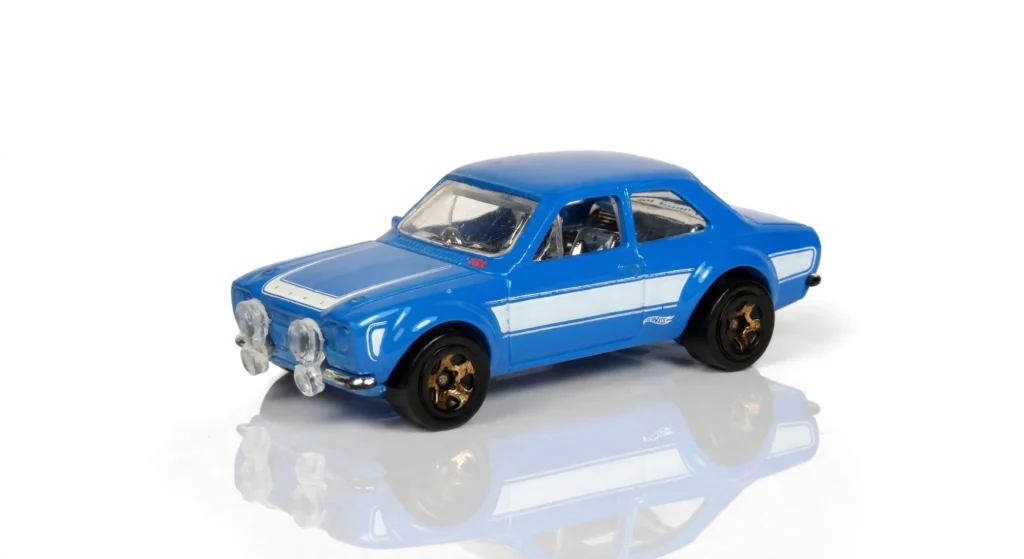
A greyed medium blue with a white side stripe running the length of the car, widening into a panel over the rear quarter. A small Hot Wheels flame low on the rear door area. A tiny red number near the windscreen pillar. That is the whole deco.
The restraint is right. Period rally Escorts often ran nearly plain with a handful of small decals, so a clean blue and white scheme reads as authentic. Covering this body in modern sponsor logos would have ruined it.
The glazing is clear, and through the windscreen you can make out interior structure that reads as a roll cage. More than most mainline cars offer, and the reason clear glass was the right call here.
Is the Hot Wheels Escort RS1600 worth collecting?
For anyone interested in rally or European cars, yes. The mainline range is dominated by American muscle and Japanese sports cars, so a small square rally saloon looks completely unlike everything around it.
It also pairs naturally with other homologation era cars, which is one of the better ways to organise a shelf. A row of small, boxy, purposeful cars built to satisfy a rulebook tells a story about motorsport regulation that a row of supercars never will, and it costs almost nothing to assemble.
Checking a loose Escort
Lamps first. Count them, and look for cracks and clouding.
Then the gold painted wheels, which show wear fast. Mine has visible wear on the wheel faces, normal for a handled car, and something to argue about on price.
Then the white stripe where it crosses the door shut lines, the front bumper for scraping, and the roof and bonnet under angled light. Blue hides less than you would expect.
Last, sight along the car from the front and make sure the lamp bar has not been pushed off centre. It happens easily and it is very obvious once you notice it.
Blue Escort or one of the other releases?
The Escort body has come out in several schemes and they are not all equal, mostly because of the lamps.
Some releases have the separate clear lamp cluster and some do not. That single difference changes the car more than any paint colour does, because the lamps are what make the front end interesting. A version without them is a plain blue saloon and it will bore you within a week.
So the first thing to check in any listing is the nose, not the colour. If the lamps are there, then argue about paint. If they are not, hold out for one that has them, because they turn up regularly and there is no reason to settle.
Wheel colour is the secondary consideration and I would not pay extra for any particular set.
Verdict
A modest looking car with real substance behind it. The separate clear lamps lift the front end above what a mainline casting usually manages, the deco is period correct and quiet, and the subject brings something genuinely different to a display.
Check those lamps before you hand over money for a loose one. Everything else about it is easy.