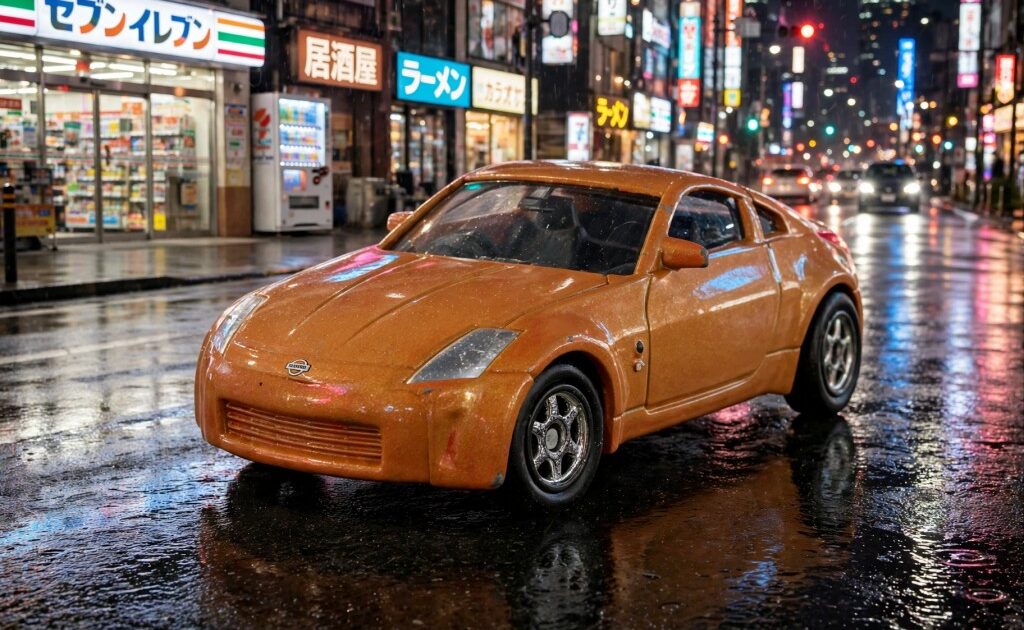
Nissan might be the most collected car brand in 1:64 that most people never think about as a brand. Ask a diecast collector to name their favorite Japanese castings and you will hear Skyline, 240Z, Fairlady, GT-R. All Nissan. The badge just does not get the credit the individual cars do.
From DAT to Datsun to Nissan
The story starts in 1911 with a company building the DAT car, named after the initials of its three backers. A smaller version arrived in the 1930s called the Datson, meaning son of DAT, which was quickly changed to Datsun because “son” sounded like the Japanese word for loss.
Nissan Motor took its current name in 1934 under Yoshisuke Aikawa, and spent the following decades building sensible, affordable cars for a domestic market that needed exactly that. The company entered the United States at the end of the 1950s, selling under the Datsun name, and for twenty years American buyers had no idea Nissan existed.
That split is why you will see both badges in your collection, and why a Datsun casting and a Nissan casting can be the same manufacturer.
Datsun 510, 240Z and Skyline GT-R
Three cars matter more than the rest.
The Datsun 510 proved a cheap Japanese sedan could handle. It won races against cars that cost far more, and it built the credibility everything else was built on.
The 240Z, launched in 1969, took that credibility and made it desirable. Long bonnet, fastback roof, European grand tourer looks at a price nobody in Europe could match. It sold in enormous numbers and it is still the Nissan that collectors reach for first. We covered the Hot Wheels Datsun 240Z in detail.
The Skyline GT-R came from a different direction. Nissan acquired Prince Motor Company in 1966 and inherited the Skyline along with it, then turned it into a homologation weapon that dominated Japanese touring car racing. The R32, R33 and R34 generations built the legend that made GT-R a name people recognise without knowing anything about cars.
Nissan in Hot Wheels
This is where Nissan quietly dominates. Hot Wheels has produced the Skyline in multiple generations, the Fairlady Z, the 240Z, the GT-R, the Silvia and the Datsun 510, and several of them appear year after year because they sell out.
The Skyline castings in particular have a reputation for disappearing off pegs within hours. If you have ever wondered why you never find one at retail, it is because JDM collectors treat new Skyline releases the way muscle car collectors treat a Super Treasure Hunt.
The 510 wagon and the 240Z are the easier ones to find, and both are excellent castings. Start there rather than trying to fight for a Skyline you will end up buying secondhand anyway.
Which Skyline generation should you collect?
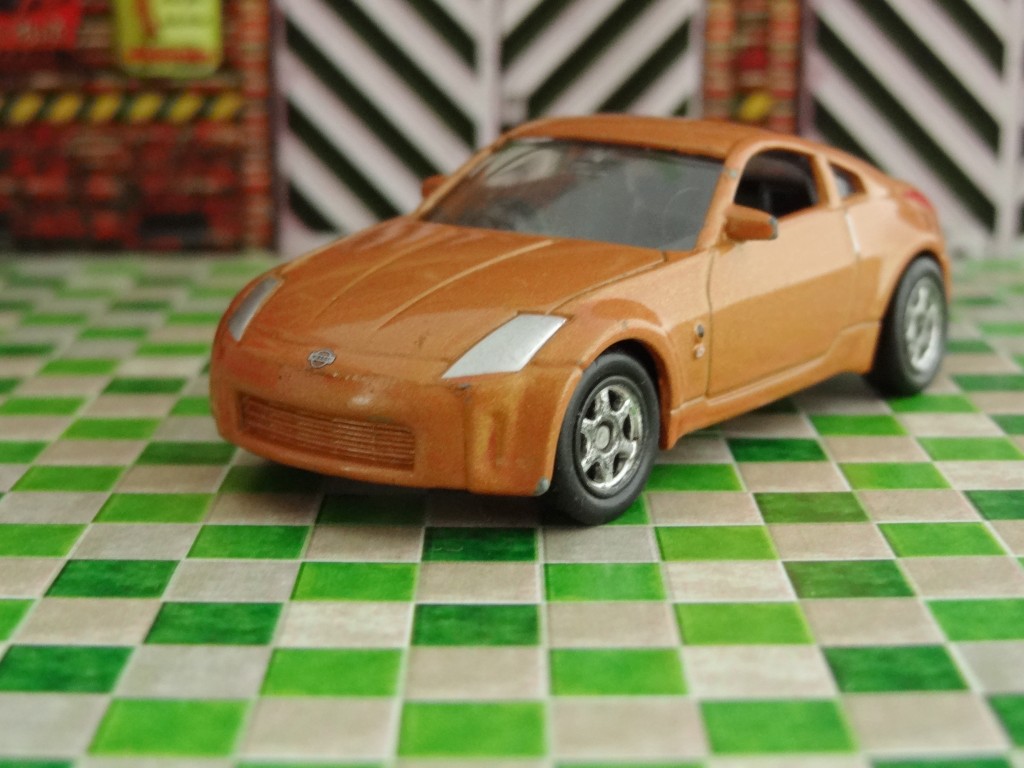
The Skyline is where most people get stuck, because there are several generations and the prices vary wildly for reasons that are not obvious from a photo.
The R32 is the one that earned the nickname. It dominated Japanese touring car racing so completely that the rulebook eventually changed around it, and that reputation follows the casting. Expect competition whenever one appears.
The R33 is the overlooked middle child. Bigger, heavier, and treated as the disappointment of the family for years, which means castings of it sit on pegs longer and cost less. If you want a Skyline without the hunt, this is your opening.
The R34 is the one that broke into mainstream recognition, helped enormously by film and video games. It is the most requested and the hardest to find at retail, and secondhand prices reflect that.
The hakosuka, the boxy first-generation GT-R from around 1970, is the collector’s pick. It looks nothing like the modern cars and it connects the GT-R name to the same era as the 240Z, which makes it a better companion piece on a shelf than another modern Skyline.
My advice for a first Skyline is to ignore the hierarchy and buy whichever one you find at retail price. All four are good castings, and paying a premium for an R34 because a film made it famous is how you end up spending forty dollars on a car that cost one.
Tomica and the Japanese makers
For Nissan specifically, the Japanese brands deserve attention. Tomica has covered the domestic Nissan range for decades, including the ordinary saloons and vans that nobody else bothers with, and the detail on the everyday models is often better than what the big brands manage.
If your collection is all American brands, a Tomica Nissan is a cheap way to see a completely different design philosophy. The proportions are more realistic, the wheels are more restrained, and the subject choices lean toward cars people actually drove.
The Renault connection
In 1999 Nissan entered its alliance with Renault, which is one of the more unusual corporate arrangements in the industry and it still shapes both companies. If you collect one, there is an argument for collecting the other. We covered the French side in our Renault diecast guide.
Which Nissan diecast should you buy first?
The 240Z, without much debate. It is widely available, it has been made by almost every manufacturer, it looks good in any colour, and it connects to the racing history that makes the brand interesting.
After that, pick a direction. The GT-R route takes you through the Skyline generations and gets expensive because everyone wants them. The Datsun route takes you through the 510 and the early Z cars and stays cheap because fewer people are chasing them.
Frequently asked questions
Are Datsun and Nissan the same company?
Yes. Datsun was the brand name used for export markets, particularly in the United States, until Nissan phased it out around 1980.
Why are Hot Wheels Skylines so hard to find?
Demand. Skyline castings are targeted by JDM collectors who clear pegs quickly, so they rarely sit long enough for casual buyers to find them.
Which Skyline generation is the best to collect?
The R33 if you want one without hunting, the R34 if you want the famous one, and the hakosuka if you want something nobody else on your shelf has.
What is the best Nissan diecast for a beginner?
The Datsun 240Z. It is affordable, made by many manufacturers, and it is the car most people picture when they think of classic Nissan.
Does Tomica make Nissan models?
Yes, extensively, including everyday models that other manufacturers ignore.
New to the hobby? Start with our beginner’s guide to collecting diecast cars.