I argued in my DBS review that Aston Martin shapes reject decoration. Here is the exception that proves it, and the reason it works is that this car was never a road car in the first place.
What GTE racing demanded
GTE is an endurance racing class for cars derived from production models, and the regulations allow significant aerodynamic modification while keeping the recognisable body.
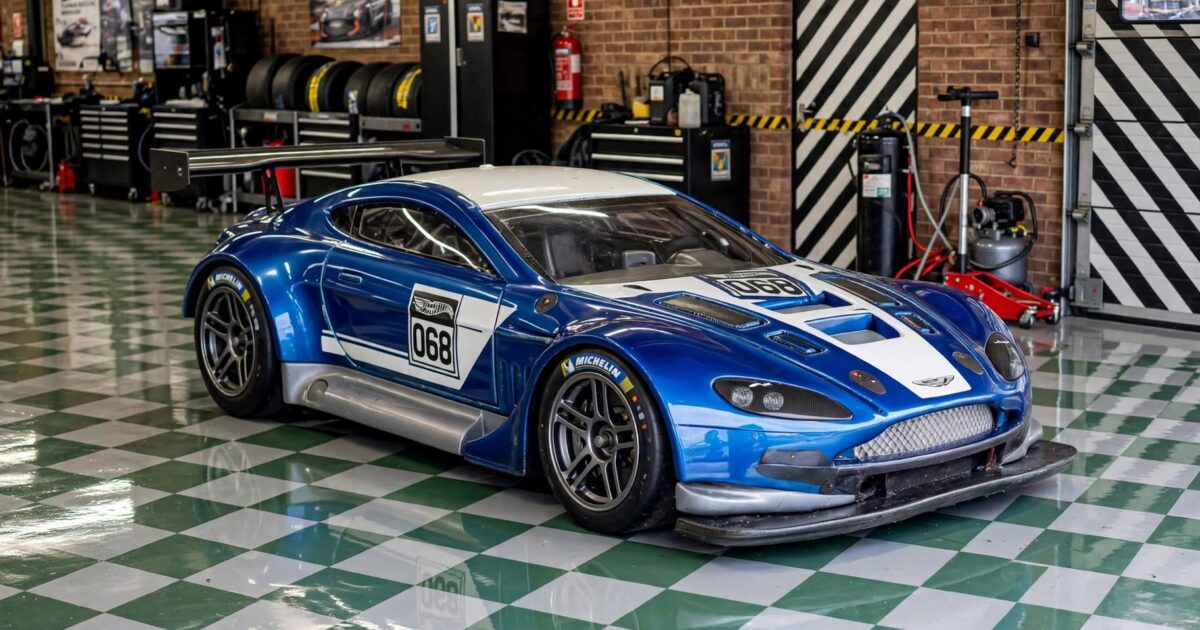
That produces a specific look. A large rear wing on tall uprights, a front splitter extending forward at floor level, flared arches, extra cooling openings, and a stripped interior visible through the glass.
All of it is present on this casting, and all of it has a reason. The wing generates downforce over the rear axle. The splitter balances it at the front. The vents feed brakes and radiators.
Why graphics work here and not on the road car
Because a racing car is a billboard by design, and everyone accepts that.
The DBS is meant to look expensive, and graphics undercut that. The GTE is meant to look fast and to carry sponsors, so the eye expects the decoration and reads it as correct rather than as vandalism.
The deco here is blue with white panels over the bonnet and roof, a number board on the door carrying 068, and white striping along the lower body. There is a Hot Wheels logo worked into the number board rather than slapped somewhere random.
The wing, and what it costs you
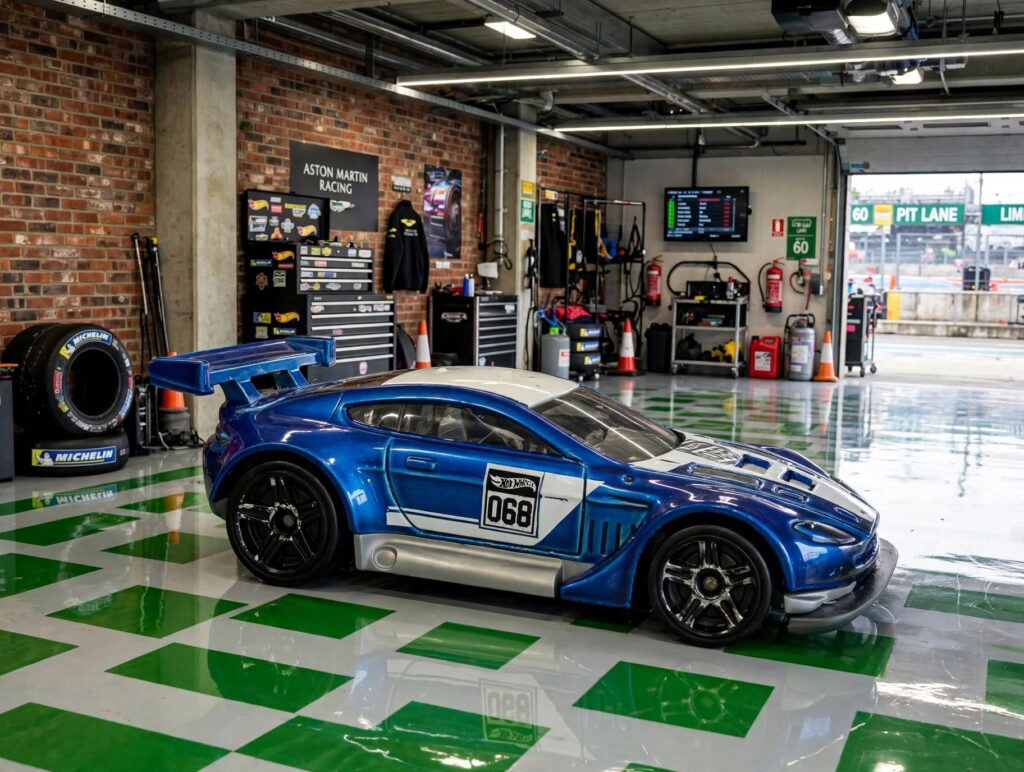
The rear wing is a separate piece standing on two uprights above the boot, in translucent blue plastic.
It is the defining feature and the fragile one. Structurally this is the most exposed part of any car in a collection, and bent or snapped wings are extremely common on loose examples.
Translucent plastic adds a second problem, because it clouds and scratches more visibly than solid colour. A hazy wing on a car where the wing is the main event is a real loss.
Check it from directly behind for level, from the side for angle, and up close for clouding.
Racing versions or road versions?
A question worth deciding before you start buying, because both exist for most sports cars.
Road versions show you what the manufacturer designed. They are cleaner, they photograph more easily and they age better on a shelf.
Racing versions show you what the rulebook demanded. They are more visually complex, they carry more moulded detail and they are more fragile.
Owning both of the same cars is the most interesting option, because the comparison teaches you what aerodynamics actually requires. That is what I did here, and the pair is more interesting than either alone.
Translucent plastic and how to care for it
Wings, windows and light bars in translucent plastic are common on racing castings, and they age differently from painted metal.
Two things damage them. Fine scratching from handling and from rubbing against other cars in storage, which builds into a haze that no cleaning removes. And light, since some translucent plastics yellow over years of exposure, particularly the clear and pale blue ones.
Storage is the answer to both. Keep cars with translucent parts out of direct light and stop them touching each other, which usually means a case with individual compartments rather than a drawer.
If a wing is already hazy, leave it alone. Polishing compounds intended for full size plastics will remove far too much material at this scale.
Buying a loose Vantage GTE
The wing is most of the inspection, as above.
Then the front splitter, which is a separate piece at the lowest and most forward point of the car. It scrapes on every surface and snaps if the car is dropped.
Then the number board tampo on the door, which sits at handling height. A car missing its number loses the thing that identifies it as a racing version.
Blue metallic hides scratches reasonably and shows chips clearly, so inspect the arch edges and the nose rather than the panels.
Endurance racing as a collecting theme
This is one of the better themes available in 1:64 and almost nobody builds it.
The appeal is that endurance grids mix manufacturers who would never otherwise share a shelf: German, British, Italian, Japanese and American cars all built to the same rulebook and all looking recognisably related because of it.
A row of GT racing castings shows you how a single set of regulations shapes very different starting points into similar answers. That is a better story than a row of supercars in different colours.
Worth adding?
Yes, especially alongside the road car. Proper moulded aero detail, deco that belongs on the subject, and a translucent wing that is both the best and most vulnerable part of it. Check that wing carefully, and expect to pay less than you would for the road version because racing castings sit longer on shelves.