Some vehicles are so familiar that a diecast of them barely needs explaining. The split window Volkswagen bus is one of a handful of shapes that people who have never owned a car can identify from across a room, and in red and white it is the version everyone pictures.
Welly makes it, and the interesting question is not whether it looks right but what a brand at this price can do with a subject this well known.
What makes a T1 a Samba
The Samba was the deluxe version, and the difference is glass. Where a standard bus had a handful of windows, the Samba added extra side windows and curved skylight panels along the top of the roof, plus a fabric sunroof on many examples.
It was sold as a tour bus, aimed at people being driven through scenery who wanted to see it. That is why it has more glass than a vehicle of this era has any business carrying.
Samba versions are the ones collectors of the real thing chase hardest, and prices for good examples have gone somewhere absurd over the last two decades.
What Welly got right
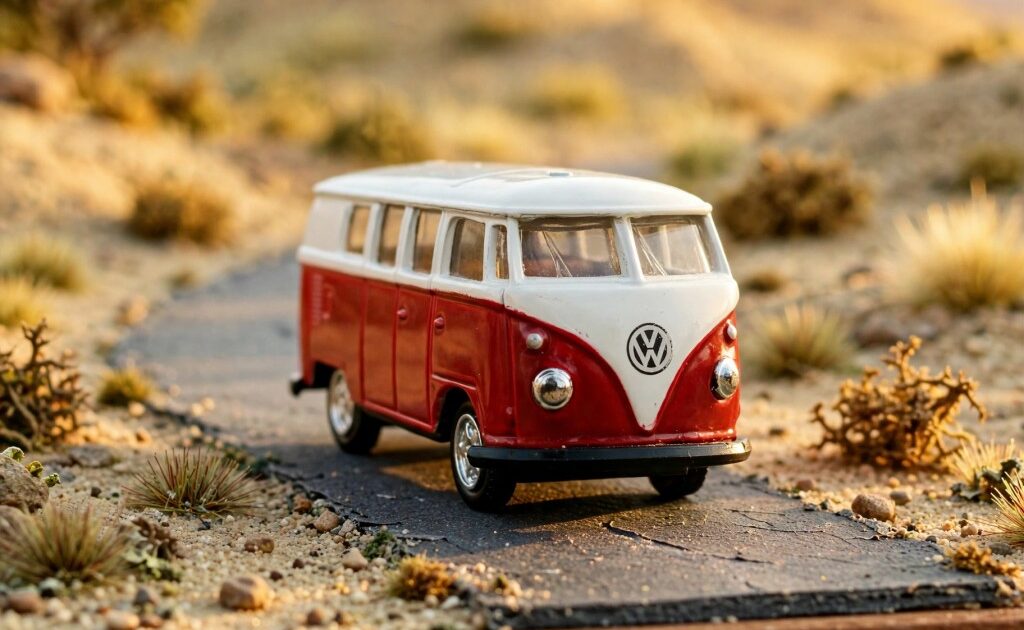
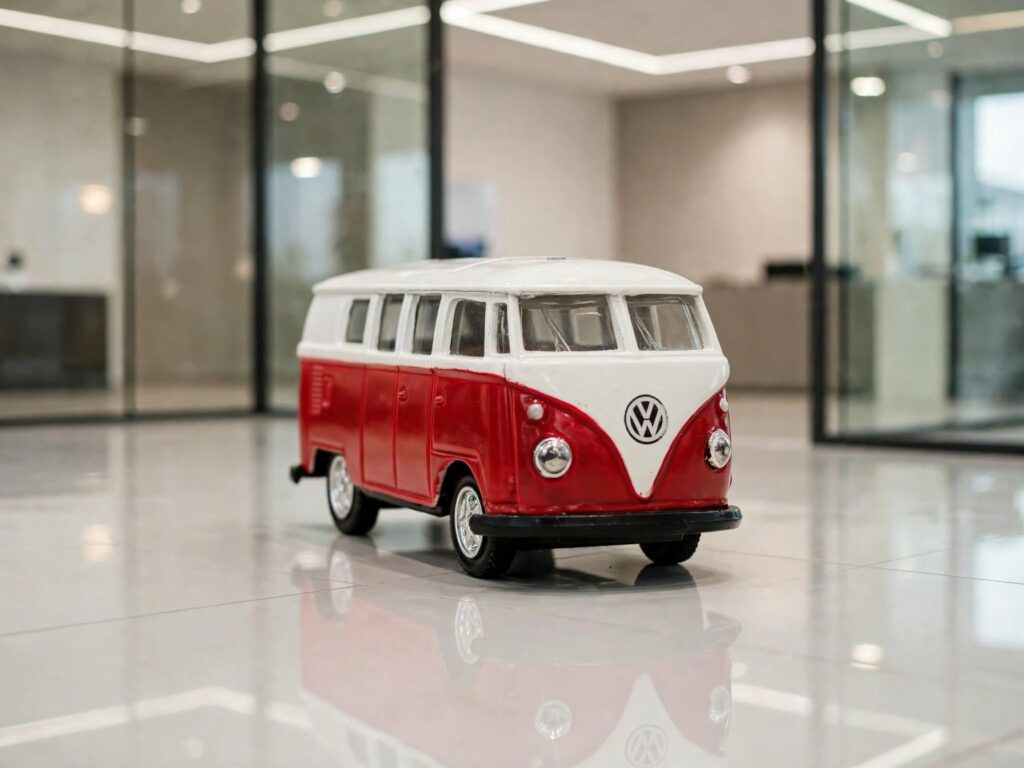
The proportions, first of all. A T1 is mostly a box, and a box is easy to get subtly wrong. The nose has the correct forward lean, the roof curves down at the rear the way it should, and the body sides carry the right amount of tumblehome.
The details are there too. You can see the engine vents moulded into the rear quarter, the fuel filler door, the door handles picked out, and the front badge on the nose. The bumpers are separate pieces in dark plastic with visible overriders.
The two tone split follows the body line cleanly, white over the roof and upper body, red below, with a sharp transition. On a vehicle with this much flat surface, a wandering paint line would be immediately obvious.
The wheels are the problem
Chrome five spoke rims. On a 1963 Volkswagen bus.
This is the recurring complaint with brands in this price bracket and it is more jarring here than on most subjects. The T1 ran plain steel wheels with hubcaps, and a modern alloy design on a vehicle this period specific breaks the illusion the rest of the casting works hard to build.
It is a parts bin decision. The body got careful attention from somebody who looked at reference photos, and then the wheels arrived from whatever was available.
If you are handy, this is one of the few castings where a wheel swap genuinely transforms the model.
Where Welly sits in a collection
Between the supermarket brands and the premium makers, which is a useful place to be. You get realistic ride height, licensed detail and subjects the big brands skip, without paying premium prices.
The trade is that the finishing details are inconsistent. Excellent bodywork, ordinary wheels, decent but not exceptional glazing. You are buying a good model with a couple of compromises rather than a carefully finished one.
For a vehicle like this, where the shape carries everything, that trade works out well.
Why the split window bus costs so much now
It helps to know what happened to the real thing, because it explains why every manufacturer makes one.
These were cheap working vehicles for decades. Tradesmen used them, they rusted, and most got scrapped without anyone caring. Then the surviving examples became countercultural symbols, and then collectors arrived, and prices for good split window Sambas climbed into territory that would have astonished anyone who owned one in 1975.
That arc is why a 1:64 version is the sensible way to own one. The diecast costs a few dollars and captures the same shape that people now pay serious money for.
It also explains the endless supply of T1 castings across every brand. Manufacturers make them because they sell, and they sell because the real ones are out of reach.
Buying a loose T1
The two tone edge comes first, as with any split paint scheme. Run your eye along the line where red meets white on both sides and across the front. Chipping starts there.
Then the glass. This vehicle has an enormous amount of it, and every window is a chance for scratching or for glue marks around the frame. Look through the side glass at an angle.
Check both bumpers, which are separate plastic pieces at the extremes of the body and bend or detach. Then the roof, because it is a large flat surface that collects scuffs and there is nowhere for damage to hide on white paint.
The Volkswagen shelf
The T1 pairs naturally with a Beetle, and between them you have most of what Volkswagen meant to the world before the Golf arrived. Both shapes are instantly readable, both were built for decades with minimal change, and both look good in almost any colour.
If you already read our piece on the Beetle, this is the companion vehicle. Two air cooled boxes, same engineering philosophy, completely different jobs.
Bottom line
Correct proportions, clean two tone work and proper moulded detail on a subject everybody knows, let down by wheels that belong on a different car entirely. Cheap enough that the flaw is forgivable, and good enough that it deserves better rims. Check the paint line and the glass before buying.