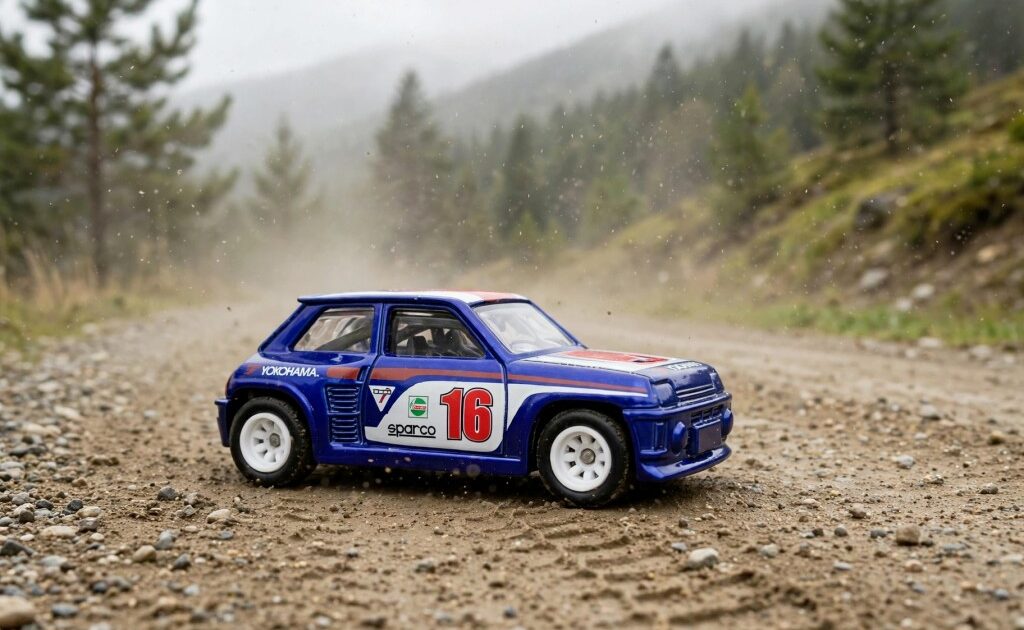
In our Renault diecast guide I wrote that if you only ever buy one Renault, make it the 5 Turbo. This is that car, and it is the version I would point anyone toward: the 2017 Car Culture Modern Classics release, number four of five in the set.
Car Culture is the premium end of the range, which means rubber tyres, a metal base and printing that a dollar car never gets. On a subject this good, that combination is close to unbeatable.
Why the Renault 5 Turbo looks like that
The ordinary Renault 5 was a small, cheap, front engined hatchback built for people who needed to get to work. The Turbo took that shell, moved the engine to the middle of the car where the back seat used to be, and flared the bodywork outward to cover far wider wheels.
It was built to go rallying under Group B rules, which is the same reasoning behind every strange homologation car. Renault needed to sell a minimum number of road versions to compete, so a sensible hatchback became a mid engined monster with almost no interior.
You can read all of that off the casting. The rear arches are enormous compared to the front, the doors carry deep air intakes feeding the engine behind them, and the whole thing sits wider than it is long in a way that looks physically wrong until you know why.
What Car Culture gets you
Three things, and on this car they all matter.
The tyres are real rubber with visible sidewall texture, mounted on white rally style rims. Period rally cars ran white wheels constantly, so this is not just a premium flourish; it is the correct choice for the subject.
The base is metal, which changes how the car feels in your hand more than it changes how it looks. A premium car has weight that a plastic based mainline does not.
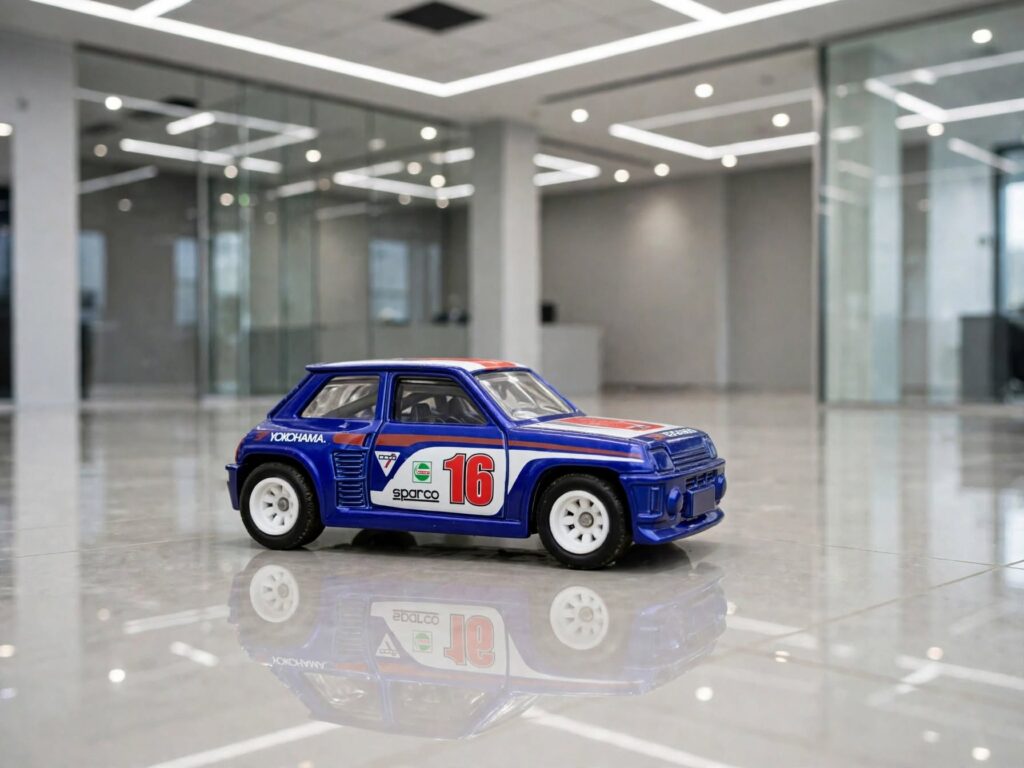
The printing is where the money shows most. This car carries a Yokohama logo on the rear quarter, a Sparco logo on the door, a red 16 in a white panel, small sponsor roundels, and red and white striping that runs the full length of the body and follows the curve of the arches. Count the tampo passes on a mainline release and then count them here.
Is the Hot Wheels Renault 5 Turbo hard to find?
Yes, and it is worth being honest about why. Car Culture sets are produced in far smaller numbers than mainline cars, they are targeted by collectors who buy the complete set, and the Renault is one of the more desirable cars in this particular assortment.
Retail availability was never realistic for most people. You are buying this secondhand, and the price will reflect that it is premium, retired and wanted.
If you want the casting without the premium price, Hot Wheels has released the R5 Turbo in other lines too. Those versions give you the same excellent body shape on plastic wheels, which is a completely reasonable compromise if the shape is what you are after.
Buying a loose Car Culture car
Rubber tyres are the first thing to inspect, yet they are often the thing nobody checks. Old rubber hardens, flat spots if the car sat in one position for years, and in bad cases starts to crack around the bead. A premium car with bad tyres has lost the main reason it cost more.
Then the tampo. There is a lot of it on this car and it crosses curved surfaces, so look at the striping where it wraps over the arches and at the small sponsor logos, which thin first.
Then confirm the base is metal. This matters because it is how you verify you are buying the premium release instead of a cheaper version of the same casting. Ask for a photo of the underside before agreeing to a premium price.
Group B cars and why collectors chase them
The R5 Turbo belongs to a small group of cars built under rules that were later judged too dangerous to continue. Group B allowed enormous power in very light cars with minimal restrictions, produced a handful of legendary machines, and was shut down after a series of fatal accidents in the mid eighties.
That short, violent history is exactly why these cars are collected so hard. There were never many of them, the era ended abruptly, and every one of them looks insane because the rulebook let them.
Assembling a Group B shelf in 1:64 is one of the more satisfying projects in this scale, and the Renault is one of the easier entries to find.
Car Culture or a cheaper R5 Turbo?
Hot Wheels has put this body out in more than one line, and the decision is less obvious than it looks.
The Car Culture car gives you rubber tyres, a metal base and heavier printing, and costs several times more on the secondhand market because the line was produced in small numbers and is long retired.
A mainline version gives you the same body tooling on plastic wheels for pocket change. The shape is what makes this car interesting, and the shape is identical.
My honest position: if you want one Renault 5 Turbo on the shelf, the mainline does the job. If you want the one that looks right in a photograph, pay for the Car Culture. Do not buy the premium version believing it will appreciate, because retired and desirable are not the same as valuable. Our piece on Hot Wheels as an investment goes into why.
Photographing it
Shoot this one straight from the side. Most cars look better at a three quarter angle, and this one does not, because the profile is where the story is: the wide rear arch, the door intake, the stubby hatchback outline underneath all the aggression.
Blue metallic with white wheels also photographs cleanly against almost any background, which is more than you can say for black or white cars.
Final call
The best version of one of the best subjects Renault ever produced, with rubber tyres, a metal base and printing that earns the premium. It will cost you more than a mainline and it is the car I would keep if I had to thin the collection. Check the tyres and the base before you pay.