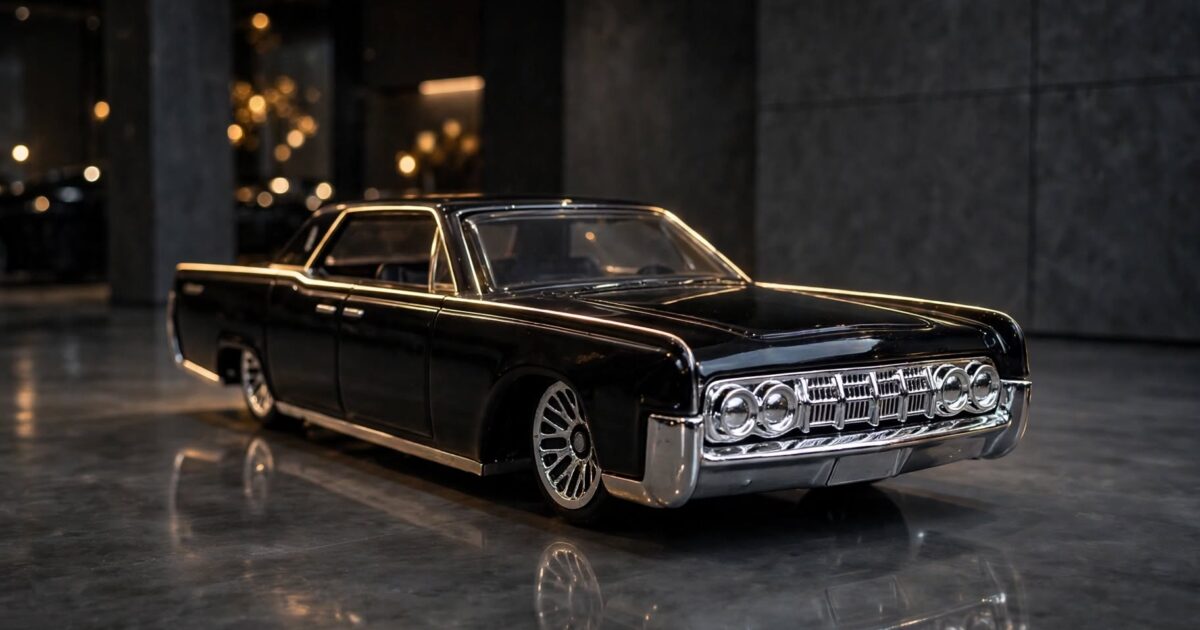
Four doors. No stripes. No flames. No graphics of any kind. Just a long black sedan with a lot of chrome, which makes this the most restrained casting I have reviewed in months and one of the most striking.
The sedan that refused to be decorated
By the early sixties American cars had been getting steadily more elaborate for a decade. Fins, chrome spears, two tone paint, badges everywhere.
The Continental went the other way. Slab sides, a flat roof, a simple horizontal line running the length of the car, and almost no ornamentation. It was smaller than the Lincoln that came before it and dramatically calmer.
The decision paid off. It is remembered as one of the best American designs of the era precisely because it did less than everything around it, and it has aged better than any of its contemporaries.
Suicide doors and what they mean
The detail everyone mentions. The rear doors are hinged at the back and open toward the rear of the car, so both doors swing away from each other and leave one large opening.
The nickname comes from what happens if one opens at speed, which is why the arrangement mostly disappeared from production cars. It survives on the Continental as one of the most recognisable features of any postwar American sedan.
On the casting you can see the shut lines cut in the correct direction, which is a detail that could easily have been ignored at this size. Look at the rear door and the handle sits at the front edge instead of the back.
Black paint on a long body
Black is the right colour for this car and the hardest one to execute. It shows every imperfection in the paint and it gives the moulding nothing to work with, because black cannot show you a surface, it can only show you reflections.
Mine is a deep gloss that reads properly under decent light, and the chrome does the describing. Wide chrome bumpers at both ends, a chrome grille, and a thin bright strip along the lower body separating the black from the shadow underneath.
Hot Wheels lowered it and fitted large chrome wire style wheels, which pushes the car toward lowrider territory. On a formal sedan that could have been a disaster and it works, because the Continental was already low and wide and the treatment follows the design rather than fighting it.
Four door cars in a collection
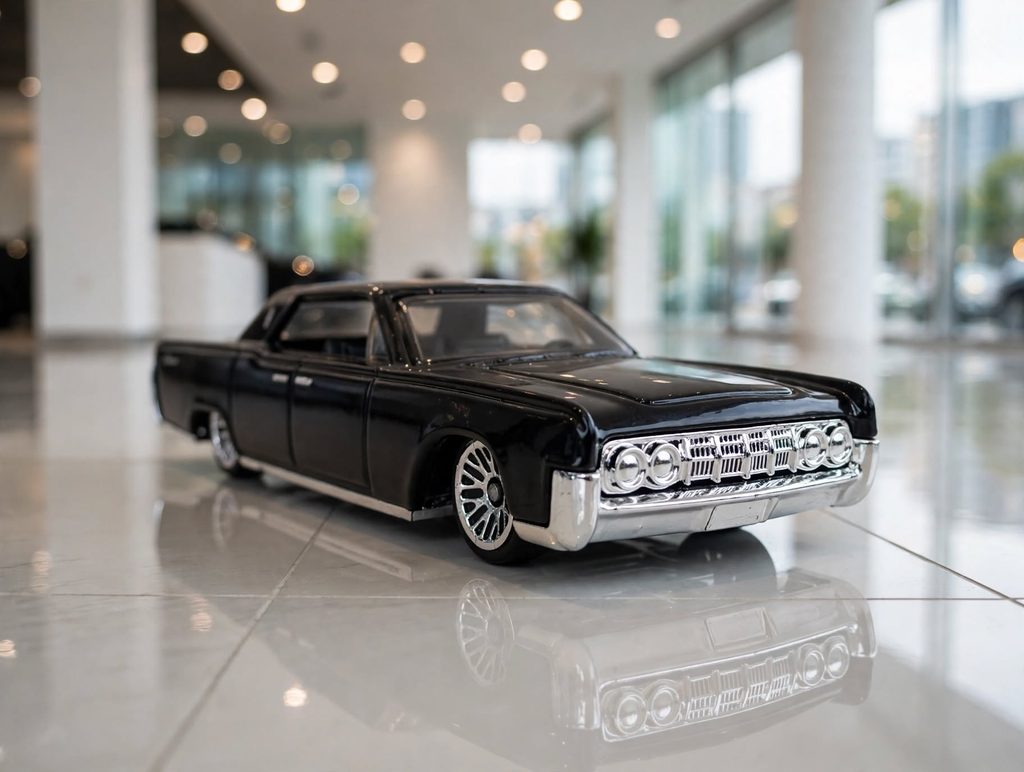
Count the sedans on any 1:64 shelf and you will find almost none. Manufacturers make coupes, sports cars and trucks because that is what sells, and four doors are treated as the boring option.
That leaves a real gap. A collection made entirely of two door cars tells you nothing about what people actually drove, and it makes every car on the shelf look the same after a while.
One good sedan fixes it. This is the one I would pick, because it is the rare four door that nobody would call dull.
Inspecting a black car properly
The advice I gave for a black BMW applies here and matters more, because this body is longer and flatter.
Never judge black paint from a single photo taken under one overhead light. That setup produces a white streak and hides everything else, which is convenient for a seller with a swirled roof. Ask for a shot with soft light from the side, or the car held near a window.
What you want is the whole roof and bonnet in one continuous gradient. Scratches announce themselves immediately in that kind of light and disappear entirely in the other kind.
Then the chrome. Two wide bumpers at the extremes of a long car, both separate pieces, both easy to bend. Sight along the car from each end.
Lincoln, Ford, and where luxury sat
Lincoln is Ford’s luxury division, which is context that explains the Continental better than any description of the car does.
Ford needed something to put against Cadillac, and Cadillac in the early sixties was selling size and ornamentation. Rather than compete on those terms, Lincoln went the other way and sold restraint, which was a genuine risk at the time.
That decision is why the car looks the way it does, and why it has aged so much better than its rivals. Fins date instantly. Straight lines do not.
If you are interested in how the wider company fits together, our piece on Ford covers the group and its divisions.
Photographing a long black sedan
This is the hardest car in my collection to shoot and I have not fully solved it.
What works best so far is a large soft light source low and to one side, with a mid grey background rather than white. Black against white turns the car into a silhouette and you lose the shape entirely. Black against grey lets the highlights describe the body line.
Shoot the front three quarter and keep the camera low. From above, a four door sedan looks like a shoebox.
Bottom line
An unusually disciplined casting of an unusually disciplined car, with correctly cut suicide door lines and enough chrome to make black paint work. It has no graphics, no gimmicks and nothing to grab attention, and it is one of the best looking things on my shelf. Check the chrome and ask for a proper photo before you buy.