Ask a collector about the C2 Corvette and they will talk about the split window. Ask them which year it was and a lot of them get it wrong.
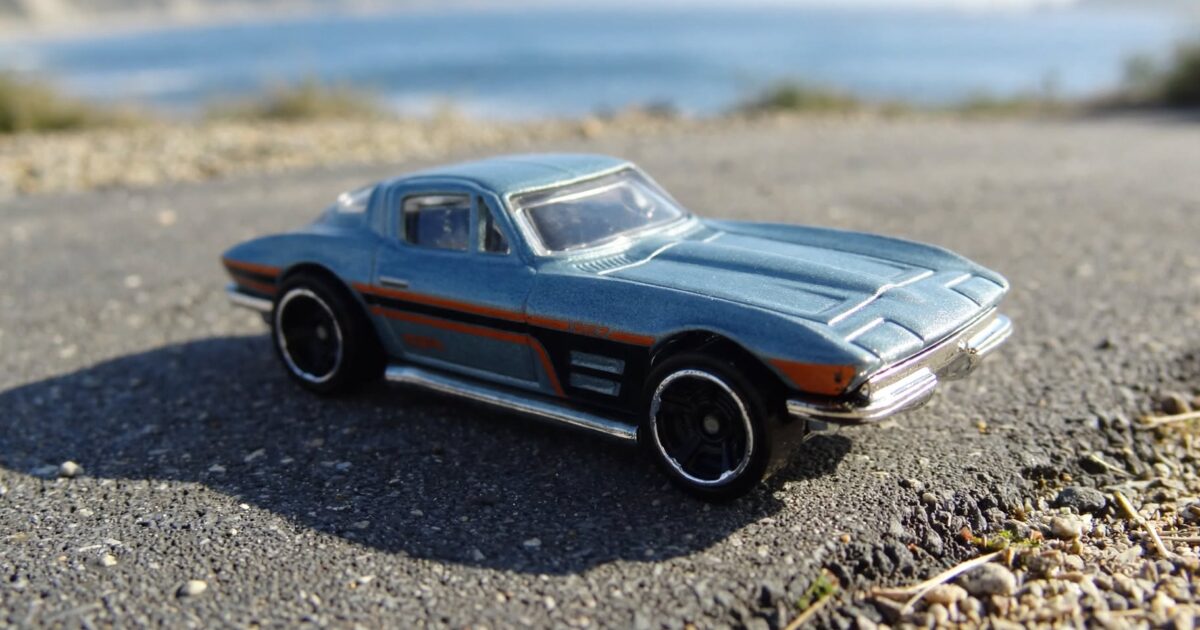
The answer is 1963, and only 1963. This casting is the 1964 car, which is the same beautiful body with the divider gone, and that single difference is worth an article on its own.
Why the split window lasted one year
The 1963 coupe had a vertical bar dividing the rear window into two panes. It was a styling decision, pushed hard by the design side and disliked by the engineering side because it wrecked rearward visibility.
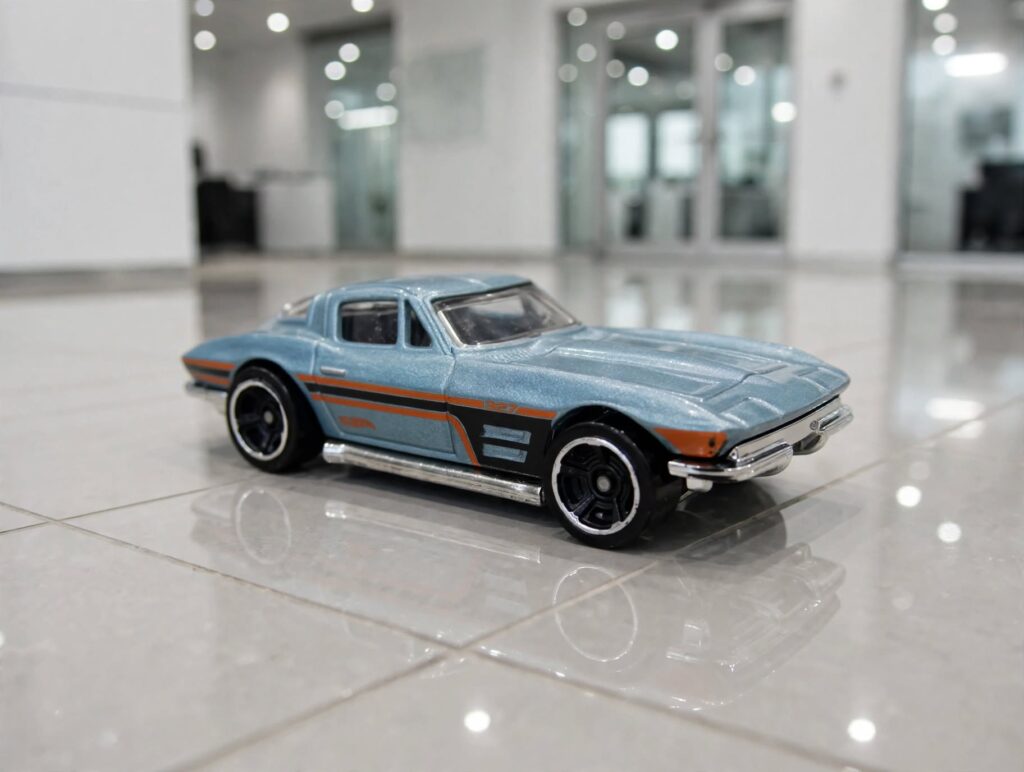
Engineering won. For 1964 the divider disappeared and the rear window became a single pane, which is what you see on this car.
The irony is well known now. The one year feature that owners at the time sometimes removed for a clearer view became the detail that makes the 1963 car worth dramatically more than the 1964. Collectors pay for the thing the original buyers complained about.
If you are buying a C2 casting and the seller says split window, check the rear glass in the photo. A lot of listings use the term loosely.
A shape built out of curves and creases
The C2 is genuinely hard to reproduce, because it combines both things that usually defeat a small casting. It has soft compound curves over the wings and hard creases running along the top of them, and you need both to read.
Look at the bonnet. There is a raised centre section with two recessed panels, flanked by peaks that run over each front wheel and fall away toward the nose. That is a lot of surface information in a very small area.
This casting holds it. The peaks are sharp enough to catch light, the recessed hood panels have visible depth, and the wing tops still curve properly rather than flattening into planes.
The hidden headlights are moulded closed, which is correct for a car at rest and the only sensible choice at this size.
Ice blue metallic and the 327 stripe
The colour is a pale blue metallic with a strong flake that shifts toward silver in bright light. It suits the shape, because a dark colour would swallow all that surfacing and a bright one would fight it.
The deco is a black side panel with orange striping running along the lower body from behind the front wheel, carrying the number 327 printed in orange near the front.
That 327 is an engine reference, and it is the detail that tells you somebody did their homework. It is also placed where a real owner would have put a badge, low on the front wing behind the wheel arch.
The wheels are black with chrome outer rims and whitewall style edges, which reads period correct without going full whitewall.
Which C2 casting should you buy?
If you want one Corvette from this generation, the honest answer is the split window, because it is the famous one and the price difference in 1:64 is nothing.
If you want the better looking object, I would argue for this one. Without the divider the rear glass is a single clean curve, and on a car this sculptural the extra visual noise of the bar competes with everything else.
Buy both if you can. Side by side they show you a design argument that played out inside General Motors, which is more interesting than either car alone.
Corvette generations worth collecting
The Corvette is one of the few cars where collecting by generation genuinely works, because each one looks nothing like the last.
The C1 is the fifties roadster with the toothy grille. The C2 is this, the shortest lived and the most sculptural. The C3 stretched the same ideas into something longer and wilder. After that the design language changes completely.
Four castings covering C1 through C3 will cost you very little and will show more design evolution than any other American nameplate can, because Chevrolet kept starting over instead of refining.
The C2 is the one to buy first. It is the shortest generation, the best proportioned, and the one everything else gets compared against.
Buying a loose Sting Ray
The nose is the first check. It is pointed, low, and the furthest forward part of the car, so chips and flattening there are almost universal. Mine has some wear on the front edge and around the bumper.
Then the side tampo, which sits at handling height along both flanks. The orange stripe is thin and it thins further with use.
Pale metallic hides scratches well and shows chips as dark marks, so inspect edges: the wing peaks, the door edges, the boot lip.
Then the chrome bumpers, which are small separate pieces at both ends. And roll it, because a low car with a bent axle looks obviously wrong.
Where it sits on the shelf
The Corvette is one of the few American cars that works next to European sports cars instead of only next to muscle. It is the same size, the same layout and the same intent as a Jaguar or a Porsche from the same years.
Putting it in that company instead of beside Chargers and Camaros makes the whole group more interesting, and it shows the C2 for what it was: America’s attempt at a proper sports car rather than a straight line machine.
My honest recommendation
An excellent casting of a genuinely difficult shape, in a colour that flatters the surfacing, with an engine reference that shows research. The split window gets the glory and this is the better looking car. Check the nose before you pay, and do not let anyone sell you a 1964 as a split window.