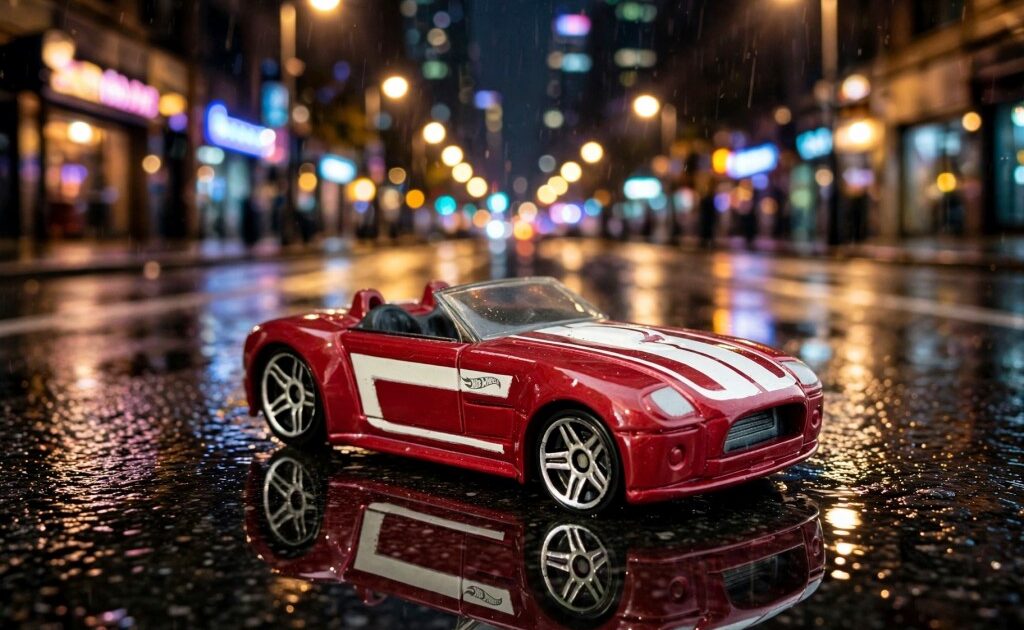
Concept cars are a strange thing to collect. The real vehicle was built once, shown at a motor show, driven onto a stand and then parked in a corporate collection forever. There is no owner community, no racing history, no restoration scene.
What there is, occasionally, is a shape that deserved better. The Ford Shelby Cobra Concept from the mid 2000s is one of those, and Hot Wheels has kept it alive far longer than Ford did.
The car Ford showed and never built
The concept was a modern interpretation of the original Cobra: front engine, two seats, no roof, enormous power. Ford put a big V10 in it and showed it around the motor show circuit to a lot of enthusiasm.
Then nothing happened. It never reached production, and the reasons were the usual ones: cost, business case, and a company with other priorities. What survives is the show car and the diecast versions of it.
That is worth knowing before you buy, because the appeal here is different from a car with a racing record. You are collecting an idea that was abandoned, which is either romantic or pointless depending on your temperament.
How the casting handles a concept shape
Better than I expected. Concepts tend to have exaggerated surfacing that looks dramatic at full size and turns into mush when shrunk, because the details that made it work were all in the reflections.
This one survives because the underlying proportions are simple. A long bonnet, a cabin pushed far back, a short tail, and a wide stance. Those read at any size.
The front carries a small oval grille opening with a mesh insert, and the headlights are set into shaped recesses on either side. The rear deck has twin humps behind the seats, which on the real car housed the roll protection.
Red with white racing stripes
The deco is the obvious one for a Cobra and it is the right call. Twin white stripes run over the bonnet and down the tail, a white panel fills the door recess, and a small Hot Wheels logo sits on the front fender.
That white door panel is the detail I would point at. On the real Cobras, racing numbers went in a white circle on the door, and this abstracts the idea without pretending the car ever raced. It references the heritage honestly.
The chrome multi spoke wheels are large, modern and a bit generic, though on a concept car that is arguably correct. Show cars ran exactly this kind of wheel.
Open cars and what they cost you
The interior is fully visible, which is a gift and a liability.
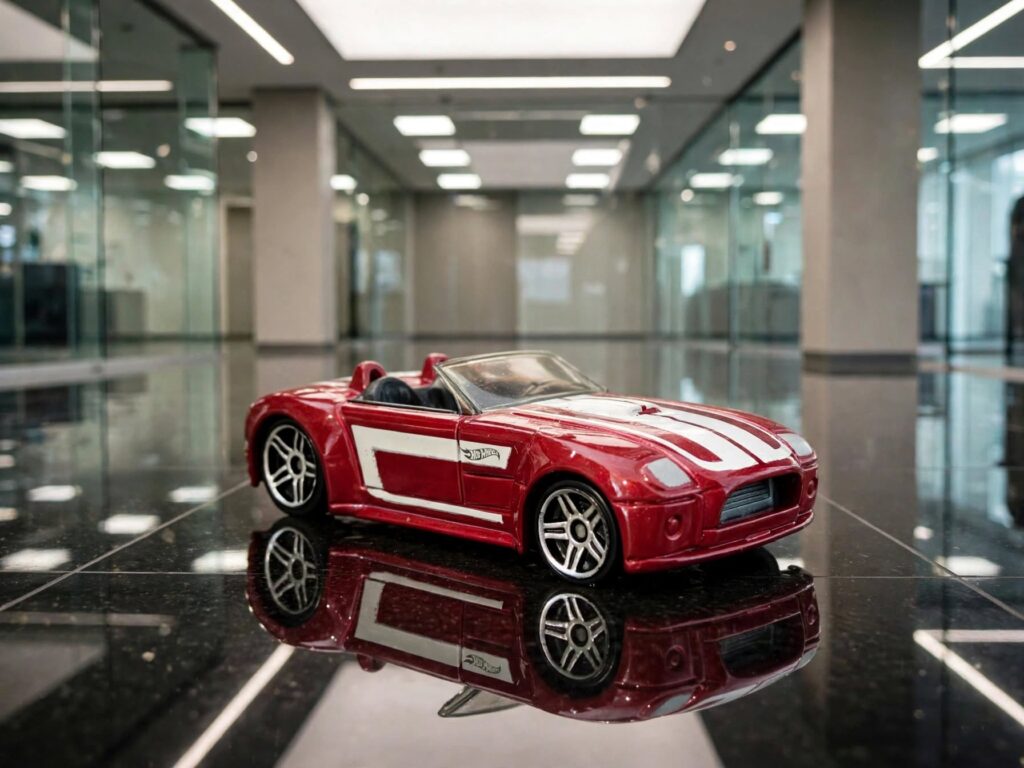
The gift is that you can see the seats, the dashboard shape and the rollover humps, which on a closed car would be hidden behind tinted glass. Open cars give a casting somewhere for the eye to go.
The liability is that there is no protection. Dust collects in the cabin, the interior scratches, and the low windscreen is a thin exposed piece that bends. My example shows wear on the paint edges and marks across the bonnet that a closed car would have hidden.
If you are buying an open casting loose, look straight down into it before anything else.
Is a concept car casting worth collecting?
It depends on what you want your shelf to say.
Against: no history, no racing record, no community. A concept car in your collection cannot tell you a story about anything that happened, because nothing happened.
For: these shapes are the only place some designs exist at all, and a shelf of production cars only tells you what got approved. Concepts tell you what got imagined, which is a different and sometimes more interesting question.
I keep a small group of them for exactly that reason. They break up rows of familiar cars and they prompt more questions from visitors than the famous ones do.
Concept cars Hot Wheels has kept alive
Mattel has a long habit of producing concept vehicles, and over the years that has preserved a surprising number of designs that went nowhere.
Some were manufacturer show cars like this one. Others were Hot Wheels originals, designed in house with no real world counterpart at all, which is a category that confuses people who assume every casting is based on something.
The useful distinction when you are buying: a manufacturer concept has a real car behind it that you can look up, photograph and read about. A Hot Wheels original does not, and that changes how much there is to know about it.
Both are legitimate things to collect. Just know which one you are holding, because sellers sometimes describe fantasy castings as if they were real cars.
Buying a loose Cobra Concept
Start with the windscreen. It is low, thin, transparent and unprotected, and it is the piece that breaks.
Then the interior, as above. Look down into the cabin under good light for dust, scratching and any sign the seats have been damaged.
Then the white stripes where they cross the highest point of the bonnet. Mine has visible wear there and some marks along the flanks, which is normal for a car that has been handled.
Red paint hides less than people assume. Check the nose and the tail edges for chips down to bare metal, which stand out badly against a solid colour.
In short
A clean casting of a shape Ford decided not to build, in the only livery it could sensibly wear. No history behind it and a genuinely good silhouette, which is the whole trade with concept cars. Check the windscreen and look into the cabin before you pay.