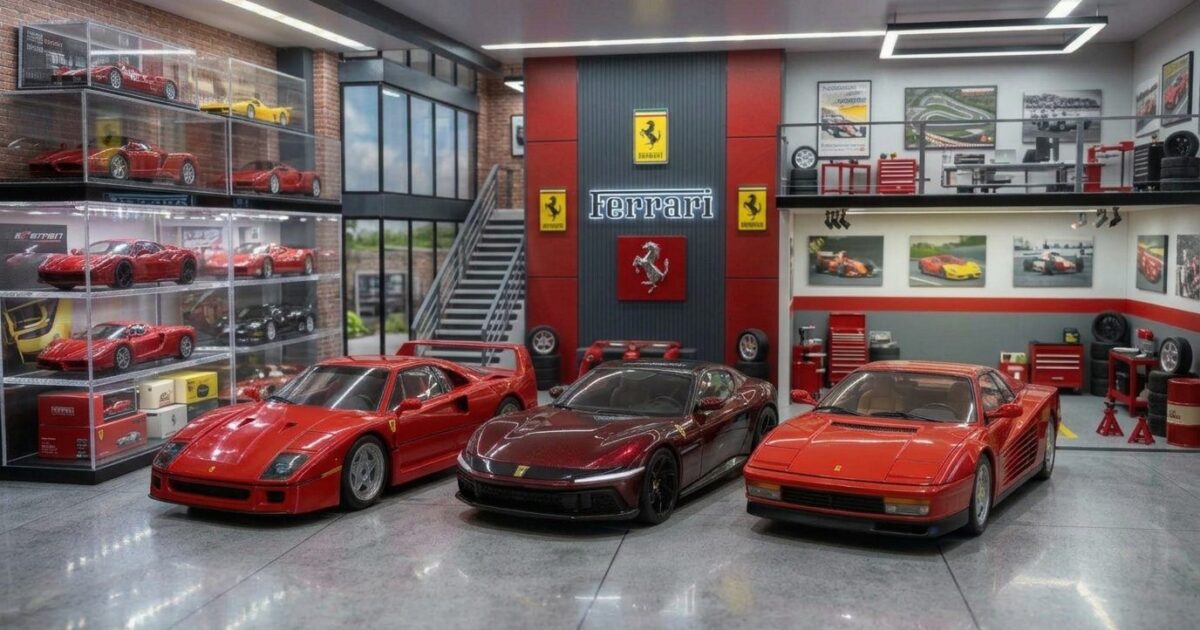
Here is something that catches new collectors out. If you own a Ferrari made by the biggest toy car brand in the world, it is either more than a decade old or almost new, and there is nothing in between.
The licensing agreement between the two companies ended in 2014. For roughly ten years after that, the most famous car manufacturer on earth simply did not appear on those pegs, and anybody who started collecting then never saw one arrive. The partnership resumed in 2025. That gap is the single most useful thing to know about collecting this marque.
What the gap means when you are buying
Two practical consequences. First, any Ferrari from that brand on a secondhand listing is at least ten years old, so condition matters more than it would for a recent casting.
Second, the demand did not go anywhere during those years. It moved to the European makers holding licences of their own, which is why many of the Ferraris in circulation at small scale come from Italian and continental brands. If somebody tries to sell you one as rare purely because it is a Ferrari, the actual scarcity markers are explained in are Hot Wheels a good investment.
A driver who turned out to be better at organising
Enzo Ferrari wanted to race. He got a job as a test driver at Alfa Romeo in his early twenties, and it became clear fairly quickly that driving was not where his talent lay.
What he was good at was running things. He stayed at Alfa doing exactly that, and in 1929 he set up a racing team under his own name, operating with the manufacturer’s backing. For most of a decade he ran somebody else’s cars under his own name.
The split, and the first car with his name on it
The relationship with Alfa ended at the close of the 1930s. The war interrupted everything that followed, and it was only afterwards that the first car carrying the Ferrari name appeared, built around a V12 engine.
Notice the choice of engine. A twelve cylinder was an extravagant decision for a small company with no capital behind it, and it set the tone for everything the brand has done since. The road cars existed to fund the racing.
The horse came from a fighter pilot
The prancing horse was not a Ferrari family emblem. It belonged to Francesco Baracca, an Italian fighter pilot of the First World War who carried it on his aircraft.
After Baracca’s death his mother suggested to Enzo that he use the symbol on his cars for luck. He did, on a yellow background taken from the colours of his home city. So the most recognisable badge in motorsport is a borrowed military insignia sitting on a municipal flag.
It also explains a detail collectors miss. The yellow behind the horse is not a styling choice and it is not the same yellow the company paints cars in. It is a city colour, and a casting that prints it wrong gets the whole badge wrong.
Why Ferraris are red
This one is not a brand decision at all. Before sponsorship liveries took over, international motor racing assigned a colour to each competing nation, and Italy was given red.
Every Italian car in those events raced in it, which is why the association outlived the rule that created it. The same system gave Britain green, France blue and Germany white, later silver. Only one of those four colours is still doing marketing work today, and it is the one that belonged to a country instead of a company.
Casting a Ferrari at three inches
The older cars are the difficult ones. A fifties or sixties Ferrari is built from long curved surfaces with almost no hard edges, and a shape like that needs good tooling and good light to show itself at small scale.
The modern cars are easier, because they carry vents, splitters and hard creases that give a casting something to grip. That is why a mainline Ferrari from the last twenty years usually reads better in the hand than a miniature of a far more valuable classic.
The other trap is the colour. Red absorbs shadow and throws back whatever light is around it, so a red casting photographs flat unless you light it from the side. Half the Ferraris ever made at this scale are red, which makes it a problem you cannot avoid by shopping carefully.
Ferrari against the other Italian
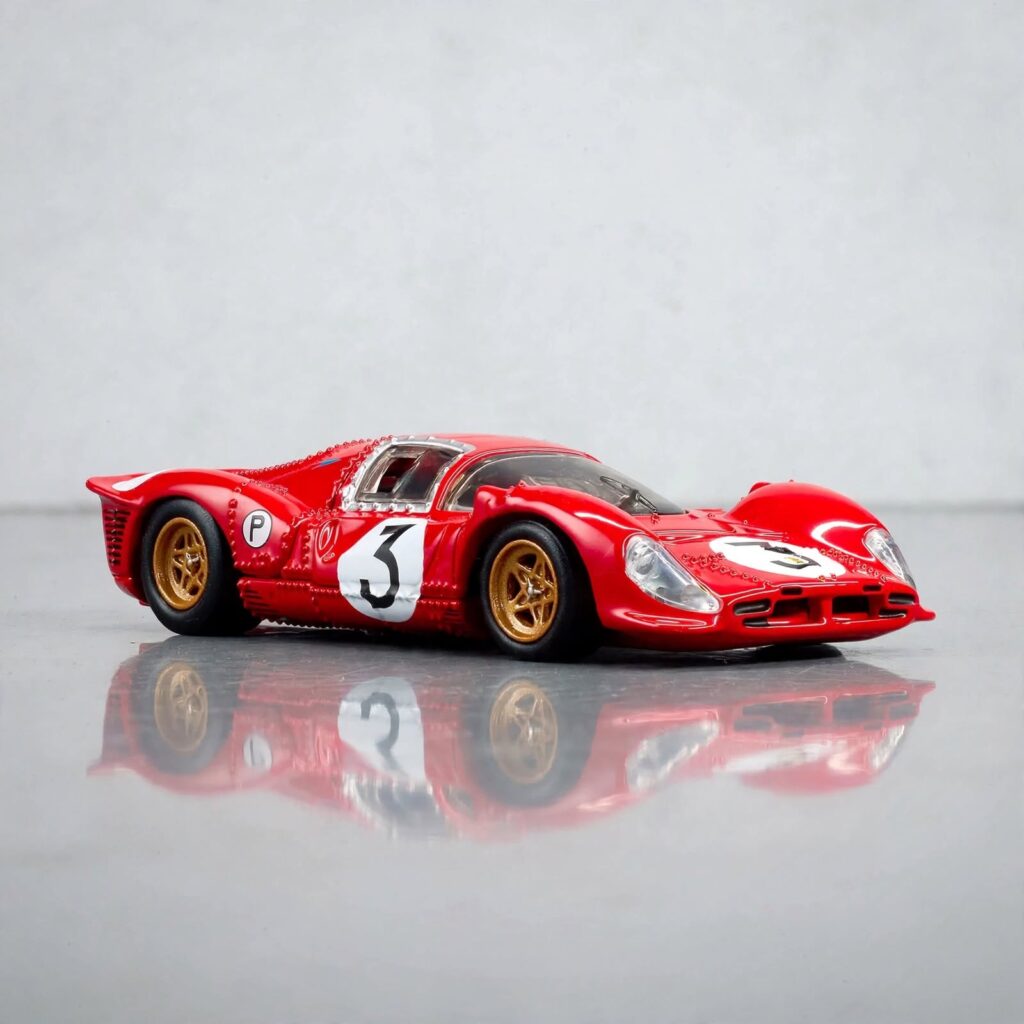
The comparison that matters on a shelf is with the brand founded by a man who had been a Ferrari customer. One builds grand tourers and racing cars with a competition history behind them. The other builds wedges and theatre, with a badge chosen out of spite.
Owning both is the point, for exactly that reason. The full story of the rival is on my Lamborghini page, and the wider map of manufacturers in this hobby is on the car brand manufacturers page.
Why did Hot Wheels stop making Ferrari cars?
The licensing agreement between Mattel and Ferrari ended in 2014. The two companies announced a new partnership in 2025, after roughly a decade with no Ferrari castings in the range.
Why is the Ferrari logo a horse?
It came from Francesco Baracca, a First World War Italian fighter pilot who used the emblem on his aircraft. His mother suggested Enzo Ferrari adopt it.
Why are Ferraris red?
Red was the international racing colour assigned to Italy, so Italian cars competed in it long before sponsorship liveries existed.
Which brands made Ferrari diecast during the gap?
European makers holding their own licences, which is why many Ferraris in circulation at this scale come from Italian and continental brands.
Was Enzo Ferrari a successful racing driver?
Not especially. He drove for Alfa Romeo early on but found his real talent in running a team, which is what led to the company that carries his name.