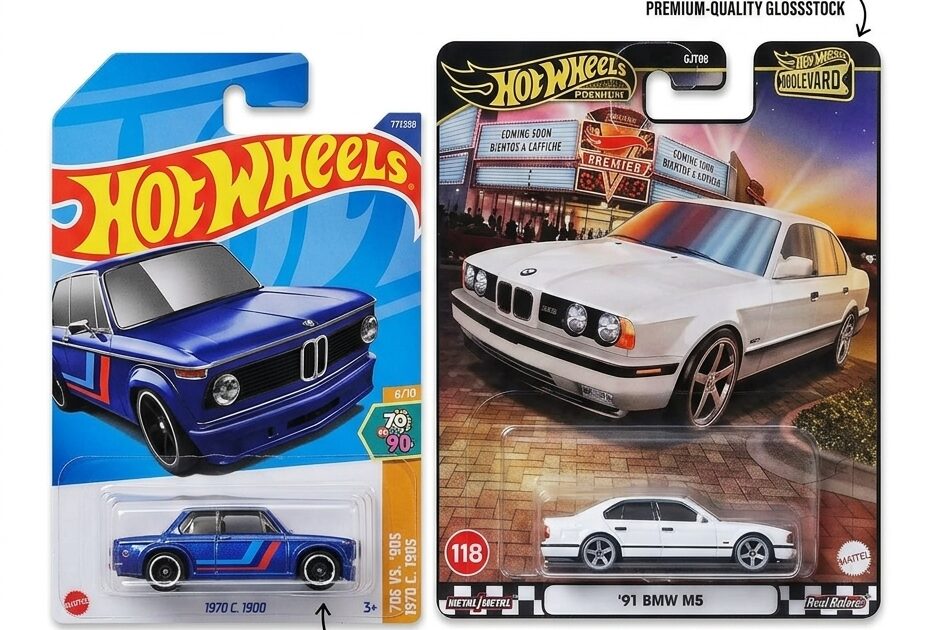
A mainline Hot Wheels costs about a dollar. A premium one costs five, sometimes more. Same brand, same scale, often the same casting underneath.
So what are you paying for, and when is it worth it? Here is what actually changes, in the order you notice it.
The tyres are the first thing you see
Mainline cars use one-piece plastic wheels. The tyre and the rim are moulded together, usually in black plastic with a painted or chromed face.
Premium cars use what Hot Wheels calls Real Riders: a separate rubber tyre fitted over a plastic or metal rim. The tyre has visible sidewall texture, often tread detail, and a matte finish that catches light the way a real tyre does.
The difference is obvious in your hand and enormous in photographs. A rubber tyre has depth. A plastic one reflects like what it is.
If you buy one premium car and put it next to your mainline shelf, this is the change you will notice before anything else.
The base tells you what you bought
Turn the car over. A mainline has a plastic base, usually black. A premium has a metal base, usually painted.
That changes the weight, which is the detail nobody mentions until they hold both. A premium car feels substantial in a way a mainline does not, and the difference is immediate even though neither is heavy.
The base is also the fastest way to verify what a seller is actually selling. Listings describe cars as premium constantly when they are not, and the base settles it in one photograph.
Always ask for a shot of the underside before paying premium money for anything.
Tampo: how many printing passes
Tampo is the printed decoration, and it is where the cost difference shows up most clearly once you know to look.
Each colour in a design needs a separate printing pass, and each pass costs money. Mainline cars get a small number, which is why mainline decos tend to use flat colour and simple shapes.
Premium cars get more passes, so you see graduated fills, fine outlines, small sponsor logos, engine badges and lettering small enough that you need to look closely to read it.
That extra printing is what makes a racing livery look researched rather than approximated.
The castings are often identical
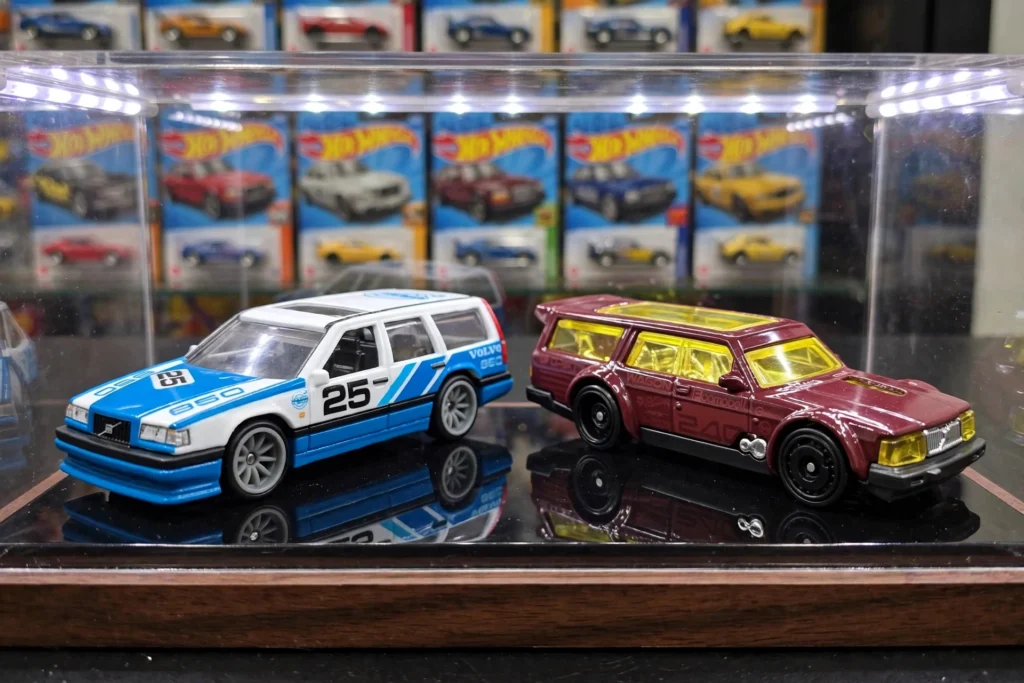
This surprises people, and it is the strongest argument against always buying premium.
Hot Wheels frequently uses the same body tooling for both. The ’55 Chevy Bel Air Gasser, for example, exists at both levels with the same shape, the same moulded details and the same exposed engine. Our review of the gold Gasser covers what you get at mainline level.
So if what you want is the shape, the mainline gives you the shape. You are paying for finishing, not for the car.
Where the castings genuinely differ is on premium-only subjects, where Mattel tooled a body specifically for the higher line and never released it cheaply.
Which premium lines exist
Worth knowing because the names appear in listings constantly and they are not interchangeable.
Car Culture is the one most collectors encounter first, released in themed sets of five. Our review of the Renault 5 Turbo from Car Culture Modern Classics shows what the line delivers.
Boulevard, Pop Culture, Team Transport and Red Line Club all sit at premium level with different focuses and different price points. Red Line Club is the collector-direct line and the most expensive of them.
Treasure Hunts are a separate thing again, and our guide to Treasure Hunts versus Super Treasure Hunts explains how they fit in.
When premium is worth the money
Three situations, in my experience.
If you photograph your cars. Rubber tyres and fine tampo photograph dramatically better, and the difference shows even in a phone picture. This is the strongest case.
If the car is open. Convertibles and roadsters show their interiors, so the extra detail is visible rather than hidden behind tinted glass.
If the subject has a lot of chrome. Premium cars get better chrome parts, and on a fifties car that is most of what you are looking at.
When mainline is the better buy
Also three, and they cover more situations than people expect.
If the car sits in a case at arm’s length. From a metre away a good mainline in the right colour holds up completely, and you could buy five of them for the same money.
If you want the shape. Same tooling, same silhouette, a fifth of the price.
If you are building a large themed shelf. Twenty mainline cars that share a theme say more than four premium cars that do not. Our beginner’s guide covers how to pick a constraint and stick to it.
The investment question
Premium cars hold value better than mainline cars, which is true and less useful than it sounds.
Production numbers are lower and demand is higher, so a retired premium release does carry a secondary price. But retired and desirable is not the same as appreciating, and most premium cars settle at a modest premium rather than climbing.
If you are buying for value rather than for enjoyment, read are Hot Wheels a good investment first. The short version is that this is a hobby that occasionally rewards you, not a portfolio.
Frequently asked questions
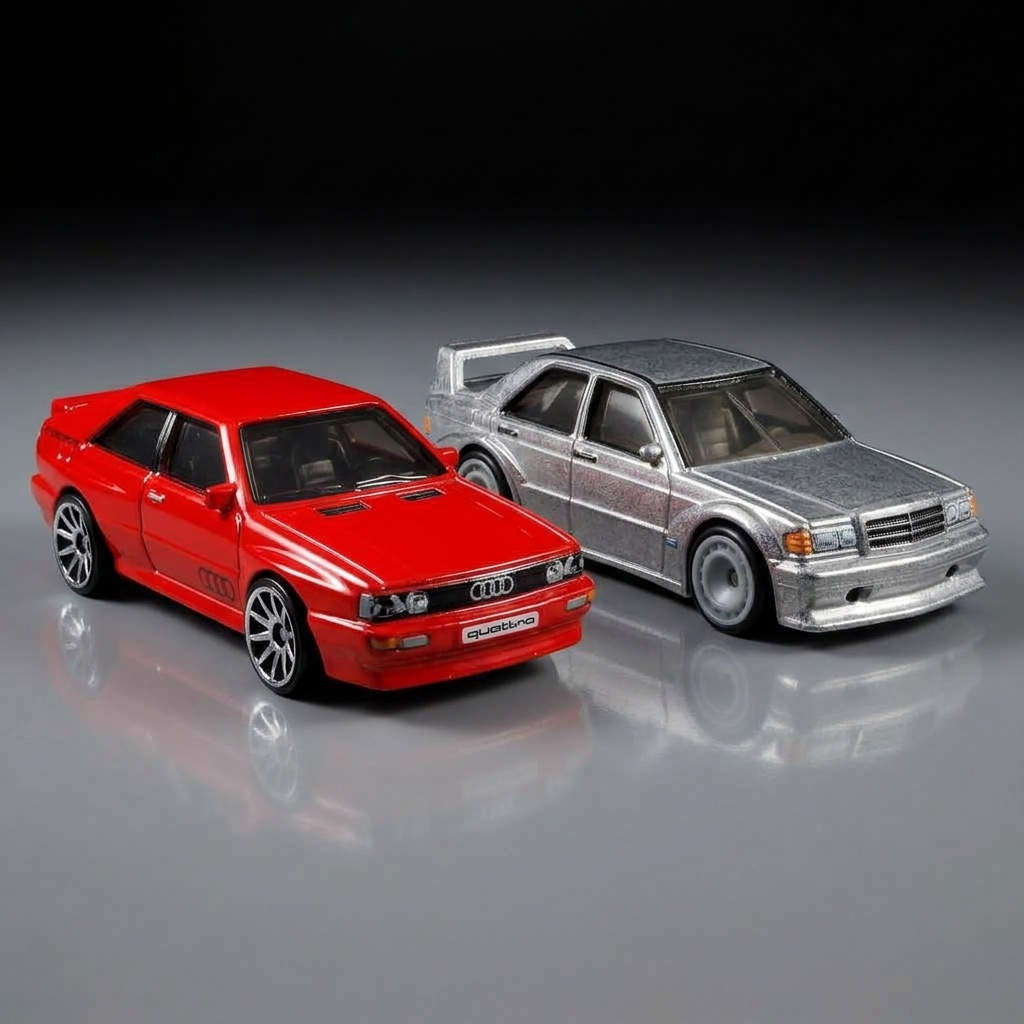
What are Real Riders on Hot Wheels?
Rubber tyres fitted over a separate rim, used on premium lines. They are the quickest way to identify a premium car from a photograph.
Do premium Hot Wheels use different castings?
Sometimes. Many premium cars share tooling with mainline releases, with the difference being wheels, base and printing. Some subjects are premium-only.
How can I tell if a Hot Wheels is premium?
Check the tyres for rubber and the base for metal. Those two together are conclusive.
Are premium Hot Wheels worth collecting?
For photography, open cars and chrome-heavy subjects, yes. For a large themed display, mainline cars give you far more shelf for the same money.
How much more do premium Hot Wheels cost?
Several times a mainline car at retail, and more again on the secondary market once a line is retired.