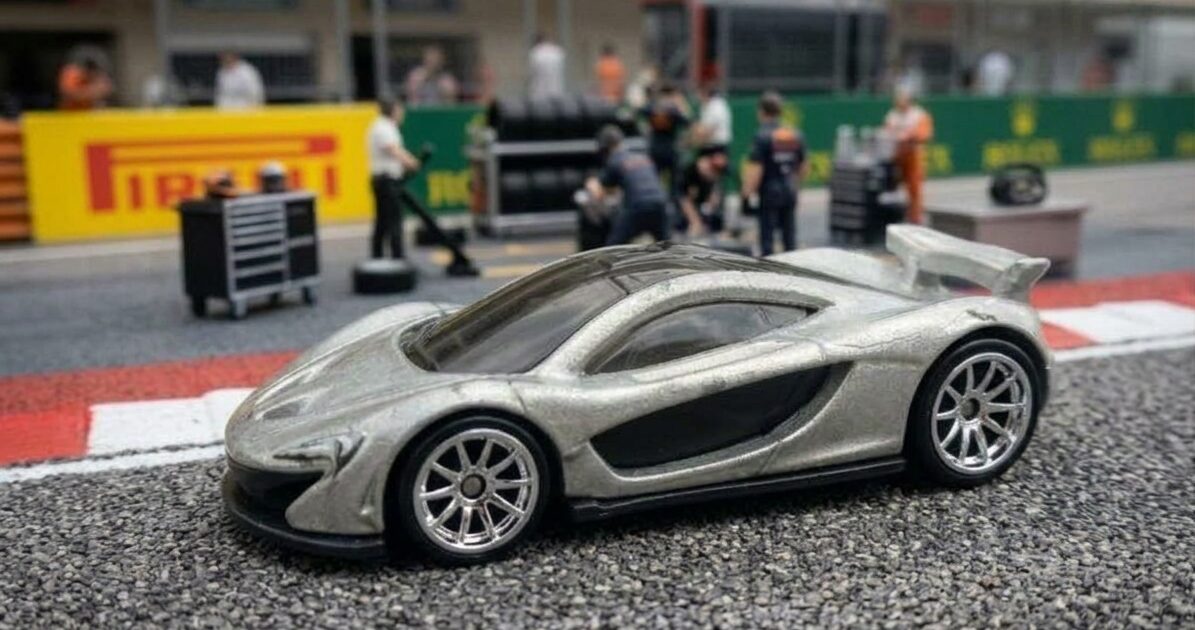
Hypercars are usually the easiest cars for me to leave on the peg. They all photograph the same, they’re all some version of wedge, and the shelf space goes to older stuff. Then I picked up this silver Hot Wheels McLaren P1, turned it sideways under the store lights, and saw daylight through the body. Not a window. An actual hole cut through the rear quarter. That one detail sold me, and it’s still the reason the car sits where I can see it.
Hot Wheels McLaren P1 silver paint and black canopy
The body is a fine metallic silver with a visible flake in it. Under direct light it sparkles. In shade it goes almost gray, which happens to suit the shape. The finish on my example is smooth across the long front clam, and that matters, since the P1 has a big uninterrupted surface between the headlights where any flaw would show.
The whole greenhouse is painted gloss black, and it reads as one dark bubble from the windshield back to the engine cover. Real P1s came with a lot of exposed carbon up there, so the black is doing the job that carbon does on the full size car.
Why the McLaren P1 shape works so well at 1:64
Here’s my theory on this one. The P1 isn’t a solid lump of bodywork. It’s a frame with air running through it: a cut behind the door, a channel over the rear fender, a hollow under the tail. Shrink a smooth modern coupe and you lose the details that gave it character. Shrink this car and the holes stay holes, because they’re structural to the shape instead of being surface decoration.
That’s why it holds up in hand. Hold it at eye level and the silhouette is still broken up by shadow and gaps, which is exactly what you see on the real thing.
There’s a second payoff. Those gaps catch shadow, so the car never looks flat in a photo, even under dull light. Most 1:64 supercars need direct sun to show any shape at all. This one holds its form on an overcast afternoon.
Side intake and vent detail on the P1 casting
The big black scoop behind the door is the standout. It’s painted black inside the recess, which gives it depth from a few feet away, and the casting line follows the real duct closely. Ahead of it, a small vertical slot sits where the door meets the front fender.
Up front there are two dark intakes under the nose, and the splitter is molded in black plastic as part of the base. The headlights are printed as a thin black boomerang shape, the P1’s signature, and on mine they’re straight with no smudging.
The fixed rear wing on the McLaren P1 casting
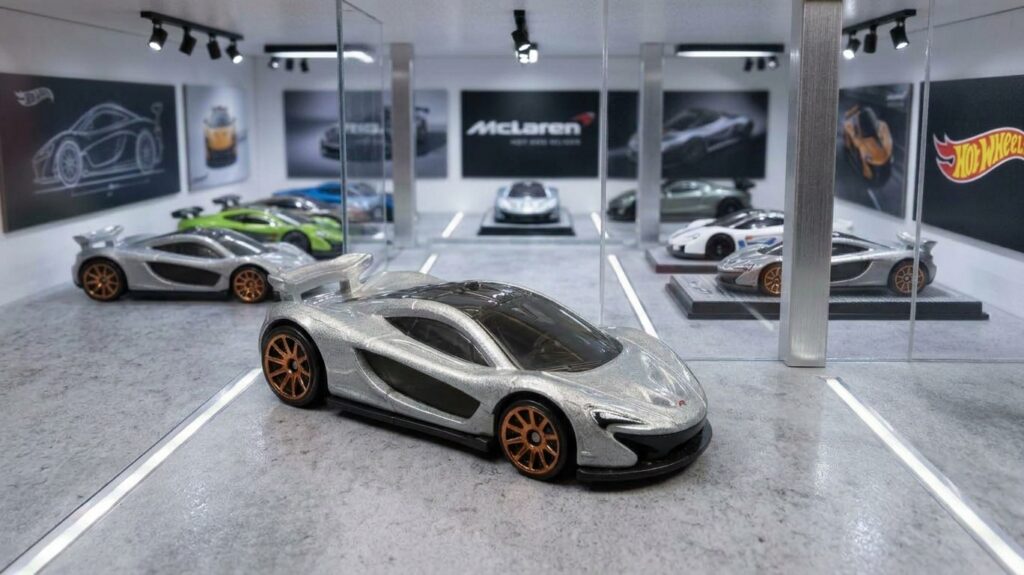
The wing sits high on two thick posts, painted silver like the body, and it stands well clear of the engine cover. Real P1s had an active wing that moved with speed. Hot Wheels locked it in the raised position, which is the right call for a toy and also the more dramatic look.
Under the wing the tail is mostly open, with a black panel where the exhaust and diffuser live. From directly behind, you can see through part of the rear end. That’s rare at this price.
Hot Wheels McLaren P1 wheels and ride height
The wheels are black with fine spokes and bronze colored centers, a quiet choice that lets the body do the talking. Bright chrome would have fought with the silver paint. These ones disappear into the arches and keep the eye on the shape.
The car sits very low, with the black splitter almost touching the surface. On my orange track section it clears fine. On carpet or gravel, the nose drags, so this is a display piece and not a car for rough terrain.
The stance is level front to rear, with no exaggerated rake. The wheels fill the arches without poking out past the body, which keeps the proportions honest. I’ve seen plenty of castings where oversized wheels turn a low car into a cartoon, and this one avoids that completely.
Is the silver P1 a mainline or a premium casting
Mine reads as a mainline car: plastic base, no rubber tires, printed headlights instead of separate lenses. Nothing wrong with that at this price, and the paint quality on mine is above what I expect from the regular line.
If you’re hunting versions, the card code tells you which wave shipped it, and I explained how to read those in my notes on Hot Wheels case codes. Silver and chrome finishes also get confused with the special hunt cars, so if someone offers you one as rare, read my piece on Treasure Hunt versus Super Treasure Hunt before paying extra.
Photographing the silver Hot Wheels McLaren P1
Silver is a mirror. It picks up every color around it, so a bright backdrop will tint the whole car. I shot mine on an orange track section with green felt behind, and the body threw back both colors along the flanks.
If you want clean silver, use a gray or white surface and soft light from the side. The black canopy stays black no matter what you do, which gives the photo an anchor and keeps the exposure from running away. For setting up small scenes with controlled backgrounds, my diorama guide covers the basics.
What the P1 changed about my shelf
I now have one modern hypercar I actually like, and it fixed a gap I didn’t know was there. Next to the old muscle cars and the lowered pickups, it looks like something from another planet, which makes both sides look better.
I’d take this casting again in orange, the color McLaren used in most of the press photos. Until that happens, the silver one stays exactly where it is, up front on the shelf where the afternoon light hits it.