
New collectors keep running into the same puzzle: why are some cars stacked five deep on every peg while others vanish before lunch? The answer is not luck, or not mostly. It is the way new releases actually move from a warehouse to your local store. Once cases and case codes make sense to you, the whole hunt feels less random and a lot more winnable.
How new releases ship
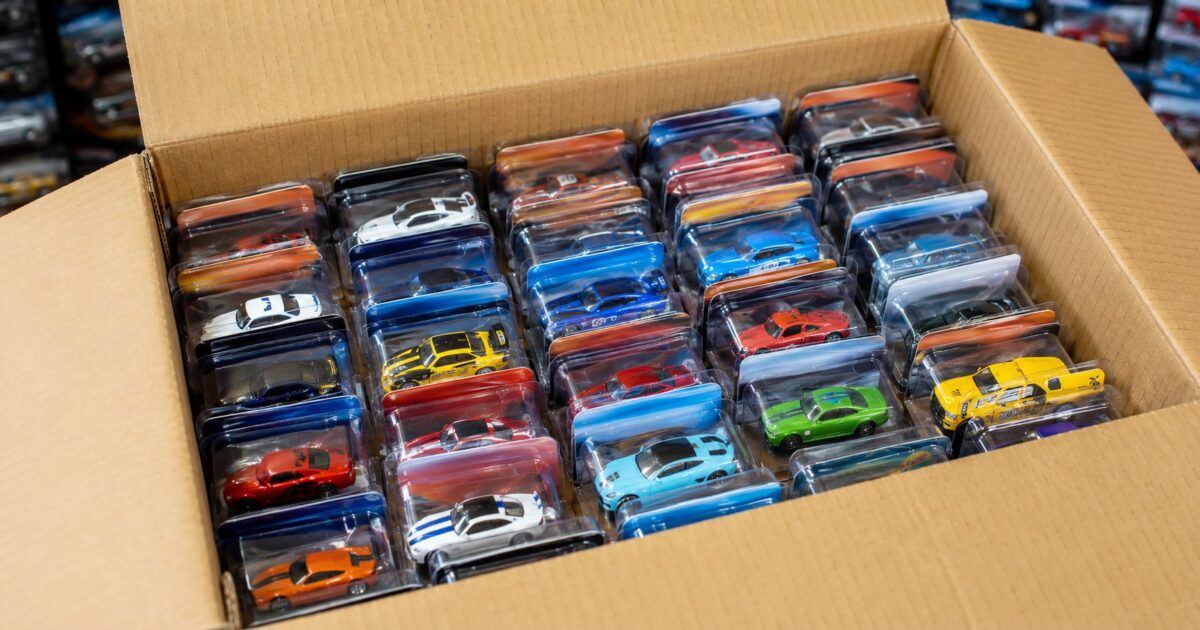
Mainline cars arrive at stores in boxes the trade calls cases, and each case holds a mix of different models rather than copies of one. That mix shifts from case to case across the year. A store does not curate what it puts out, it simply opens whatever case landed on the truck and hangs the contents on the peg. That is the real reason availability feels arbitrary. For the most part, it is.
Reading a case code
Every case carries a letter code that marks where it falls in the year’s run. Collectors track those letters to know which assortment is hitting shelves and what should be inside it. The letters run roughly A through Q, and Mattel skips I and O because, stamped on a box, they look too much like a one and a zero. You do not have to memorize any of this to enjoy the hobby. But knowing the current letter turns a blind search into an educated guess about what is coming next.
Case codes versus the codes on the car
Here is a point that confuses almost everyone at first. The letter on the case is not the same as the little code stamped on the base of the car. The case letter tells you about the shipment, the assortment that arrived at the store. The stamp on the car base is a production code, a marker of when and where that individual car was made. Both are useful, but they answer different questions, so do not go looking for the case letter on the underside of a car. You will not find it there.
Mainline cases, dump bins and pegs
Not every store handles stock the same way. Some hang cars neatly on pegs in roughly the order the case came in. Others dump everything into a big bin and let customers dig, which is chaos but also where patient collectors find cars that never made it to the peg. A few stores hold new cases in the back and put them out on a schedule. Learning which kind of store you are dealing with is half the strategy, and it is worth a friendly conversation with whoever stocks the toy aisle.
Chase cars, Treasure Hunts and short packs
Some models are simply packed in smaller numbers than their case-mates. A Treasure Hunt hides in mainline cases at low quantities, roughly one regular per case and a Super only about once in every twelve. Other in-demand castings get short-packed, meaning the factory includes fewer of them per box. Those are the cars that disappear first, and they are why a certain kind of collector is standing outside the store before it opens.
How to find new releases first
- Check often rather than hard. Several quick visits beat one heroic trip across town.
- Learn your store’s restock rhythm. Many put new stock out on the same days each week.
- Be friendly with the staff. Knowing when the truck arrives is honestly half the game.
- Get there early on restock day. The good cars are gone surprisingly fast.
- Use online drops to cover whatever your local pegs never seem to get.
A word on resellers
You will notice the same people clearing whole pegs into a cart, and yes, it is annoying. You do not have to play that game to build a great collection. Most of what makes this hobby fun costs a dollar or two and turns up if you keep showing up. Save the online premium for the few cars you truly cannot find, and do not let anyone convince you that a common mainline is rare just because they bought ten of them.
The collectors who consistently land the good new releases are not luckier than you. They understand the system and they show up at the right moment, which is a skill anyone can build. If some of the terms here are new, the beginner’s guide lays the groundwork, and you can follow our New Releases coverage for what is dropping right now.