Everyone collects the 911. Almost nobody collects the car that made the 911 possible, which is odd, because the 356 is where every Porsche design cue you recognise actually started.
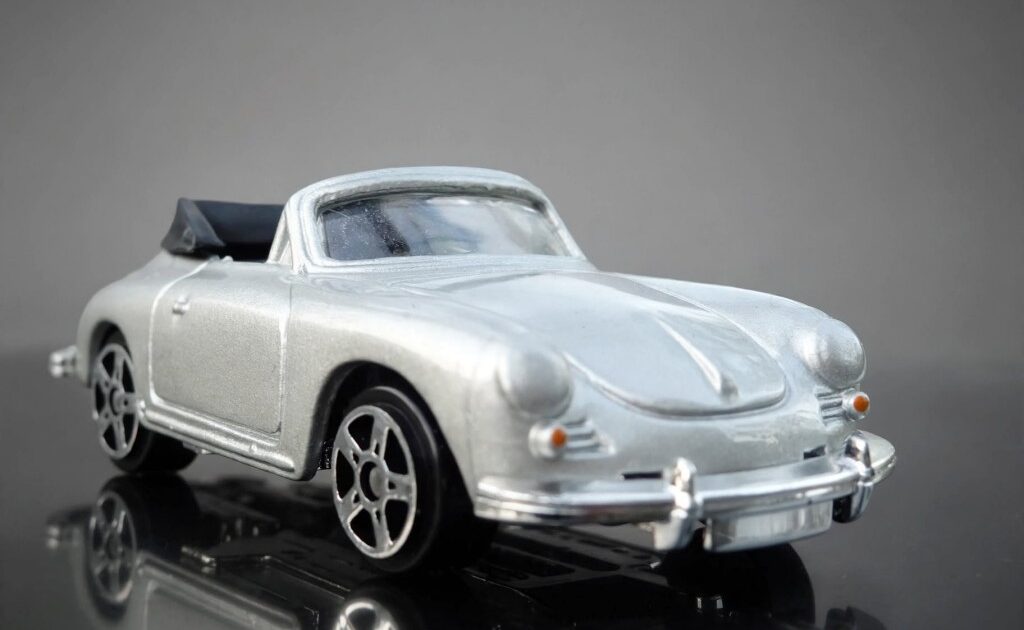
This is the 356B Cabriolet from 1961, in silver, made by Maisto. It is small, curved, and completely unlike anything else on a typical shelf.
The Porsche that came first
The 356 was the company’s first production car, built from the late 1940s onward using Volkswagen mechanical parts in a body that weighed almost nothing. Rear engine, air cooled, small displacement, and fast because of what it did not have rather than what it did.
The B series arrived around 1959 with raised bumpers, taller headlights and a reshaped nose, changes made partly for American regulations and partly for visibility. Purists argue about whether the earlier cars look better. The B is the version most people picture.
Look at the casting and you can trace the line to every 911 that followed. The sloping bonnet, the round headlights sitting proud of the wings, the roofline falling away to a tail with the engine behind it. All of it started here.
Curves are harder than edges
The modern cars I have reviewed recently survive scaling because they have hard creases. The 356 has none. It is one continuous curved surface from bumper to bumper, with no crease anywhere to hide a mistake.
That makes it a genuine test of tooling, and Maisto passes. The bonnet crown is right, the wings swell out and back in correctly, and the transition from roof to rear deck flows without the flat spot that cheaper castings develop.
The headlights are the detail worth noticing. They sit proud of the wings as separate domes, moulded rather than printed, which is exactly how the real car looks and exactly what a cheaper model would have flattened.
Chrome and the folded top
The bumpers are separate chrome pieces with overriders, sitting proud of the body at both ends. Chrome on a silver car is a hard combination, because the two finishes are close enough that the bumpers can disappear into the paint. Here they read clearly, which means the chrome is bright enough and the silver is matte enough to separate.
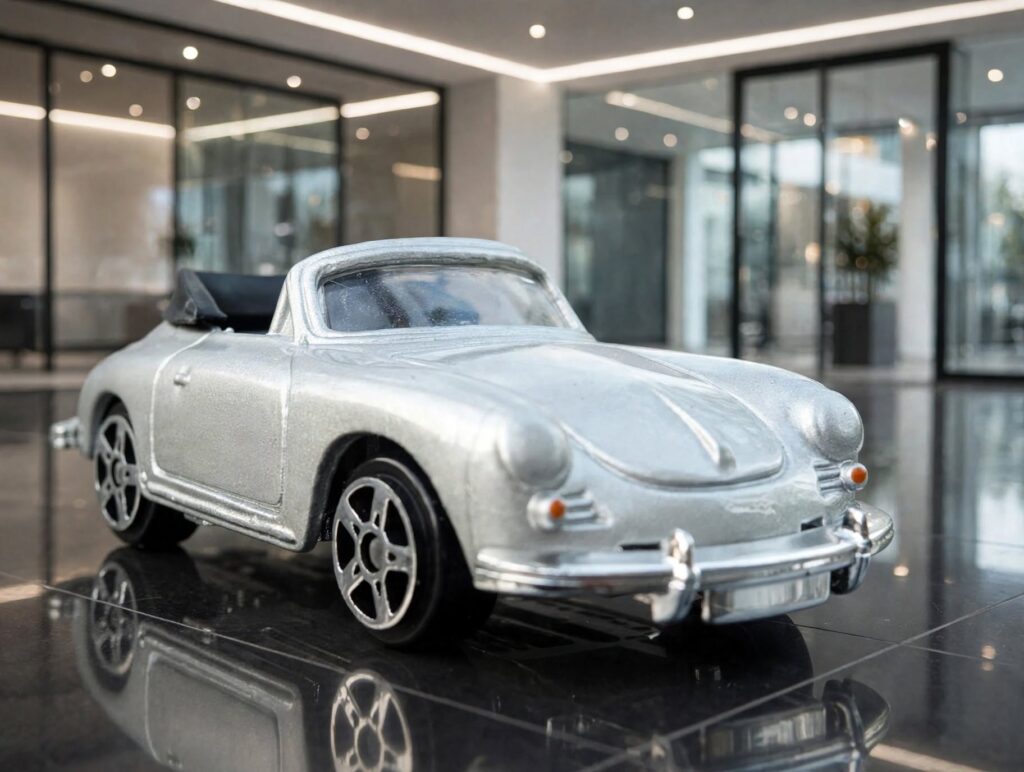
Behind the seats the convertible top is moulded in black in the folded position, which is a nice touch. It gives the rear deck a visual anchor that a bare open cabin would lack, and it explains the car: this is a cabriolet with the roof down, not a car without a roof.
The wheels are chrome five spokes and, as usual with this price bracket, they belong on a different car. The 356 ran narrow steel wheels with chrome hubcaps. This is the same parts bin problem that affects most brands below premium level.
Where Maisto fits for classic subjects
For European classics specifically, Maisto is a reasonable place to look. The subjects are chosen well, the bodies are carefully done, and the price stays low.
What you do not get is the finishing that a premium maker provides: rubber tyres, period correct wheels, detailed interiors. On a car like this those omissions are noticeable because the subject is so refined.
The honest way to think about it is that you are buying the shape. The shape is excellent and the accessories are ordinary, and for a car that is mostly about its silhouette, that is an acceptable trade.
356 or early 911: which to buy first?
If you are starting a Porsche group, I would take the 356 first and I know that is the minority view.
The 911 is the more famous car and the easier one to find, and that is precisely the argument against starting there. Everybody’s Porsche shelf opens with a 911. Yours will look like everybody’s.
Starting with the 356 sets up the story properly, because the 911 then arrives as the answer to a question rather than as the beginning of everything. It also means your second purchase is the exciting one instead of your first.
The practical argument helps too. 356 castings sit unsold while 911 releases get cleared off pegs, so the one nobody wants is the one you can actually buy at retail price.
Buying a loose 356B
Silver is the sneaky one. It hides scratches better than black and worse than people expect, so what you actually check is the edges: the wing crowns, the door edges, the bonnet lip. Chips there show as dark marks against a light body.
Then the chrome bumpers. They protrude at both ends of a small car, they are separate pieces, and they bend. Sight along the car from the front and the rear.
Then the cabin, because open cars collect dust and scratching where closed ones do not. And the windscreen frame, which on a 356 is thin, curved and the most fragile part of the whole model.
Building a Porsche shelf properly
Start with this instead of with a 911 and the rest of the shelf makes more sense. A 356 next to an early 911 next to a modern one shows you sixty years of a company refusing to abandon a basic layout, which is a better story than three variations of the same car.
It also costs less, because nobody is fighting you for 356 castings. The 911 releases get hunted. This one sits on shelves.
Would I buy another?
Yes, and I would like to find one with correct wheels. The body is genuinely well done, the chrome works against the silver, and the folded top is a thoughtful detail. The rims are wrong and the price makes that easy to forgive. Check the bumpers and the windscreen frame before paying.