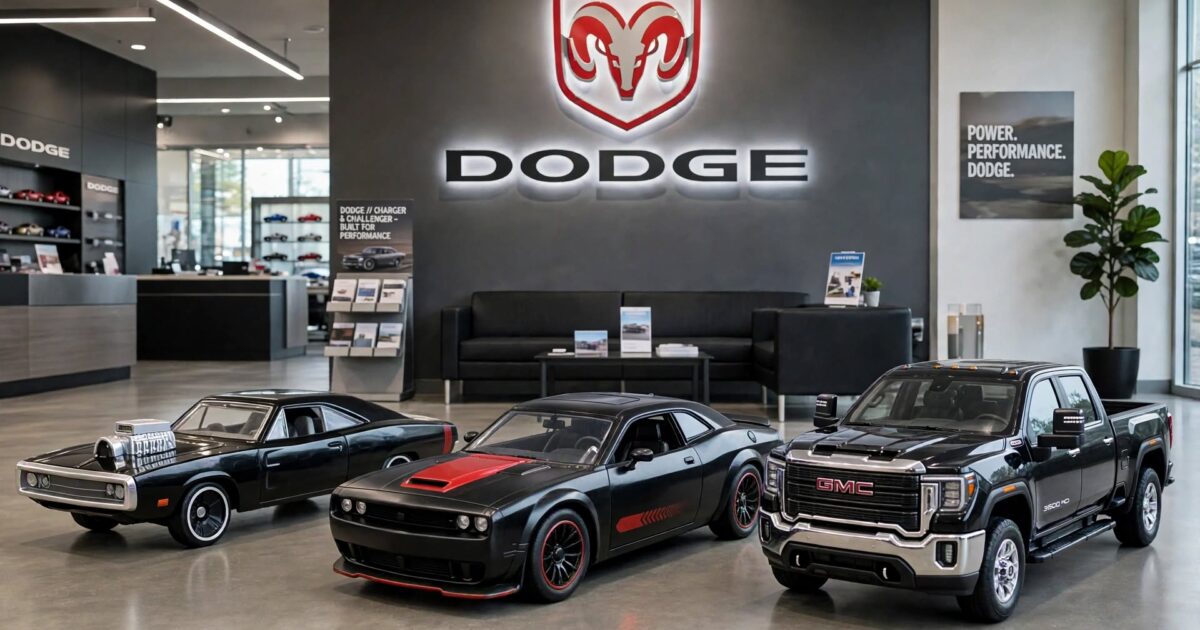
Every muscle car shelf has a Dodge on it, usually several. What almost nobody knows is that the company started out making parts for somebody else and that the two brothers who founded it were shareholders in the business they would spend their careers fighting.
That relationship, supplier first, rival later, explains more about this manufacturer than any engine specification. Dodge has spent its entire existence defining itself against somebody bigger.
Bicycles, then parts, then cars
Horace and John Dodge set up in Detroit at the start of the twentieth century, and the first thing they built was bicycles. The machine shop came next, and with it the business that made them wealthy: supplying engines, axles and transmissions to other carmakers.
The largest of those customers was Ford. The brothers were not competitors at that point. They were the people who made the mechanical parts of somebody else’s car.
Shareholders in the rival
Payment for that work came partly in equity. The brothers ended up holding a share of Ford Motor Company itself, which meant that for years they profited directly from the success of the business they supplied.
It ended in court. The brothers wanted dividends paid out, Ford wanted profits reinvested in lower prices and bigger factories, and the case became one of the most cited decisions in American corporate law. Ford bought them out, and the Dodge brothers walked away with the capital to build cars of their own.
Their own car, and then nothing
The first Dodge arrived in 1914 and sold well, helped by military contracts that put the name in front of a huge audience at no cost.
Then both brothers died within months of each other in 1920, neither of them sixty. The firm passed to their widows, who sold it to a banking house, which sold it on to Chrysler a few years later. By the end of that decade the Dodge name belonged to a corporation neither founder had any hand in.
A badge that has outlived every owner
Count the owners since: the founders, their widows, a bank, Chrysler, a German partnership, an Italian group, and the multinational that holds it now.
Through every one of them the name stayed on the cars. That is the thing to keep in mind when you catalogue a shelf by manufacturer, because the badge is a far more stable thing than the company behind it.
Trucks, and the brand that walked away
Wartime contracts in the forties turned the company into a truck builder at scale, and the civilian trucks that followed came out of that experience.
Those trucks eventually became important enough to be spun off as a brand in their own right. Anybody cataloguing a collection by manufacturer runs into this: a pickup from before the split and one from after can be the same lineage under two different badges, and the only way to be sure is to read the base.
Datsun and Nissan set the same trap, with the same fix: pick one filing rule and apply it.
Why your shelf fills up with Chargers
Walk along any muscle car display and count them. I own four of them, across different years, different brands and different scales, and not one was a deliberate decision to collect the model.
The reason is simple enough. Toy companies cast what sells, what sells is what people recognise, and a handful of films and television series put this shape in front of several generations. The result is a brand that is enormously well represented at small scale by about five of its models, with everything else barely touched.
I have no pickups from this manufacturer at all, which says something, because the trucks outsold the muscle cars for decades.
The sibling problem on a Mopar shelf
Now the practical trap. For decades this manufacturer shared bodies and platforms with a sister brand inside the same corporation, which means a Charger has close relatives wearing a completely different badge.
Two cars can be mechanically the same vehicle with different grilles, different tail lights and different names, and collectors file them wrongly all the time. If you are organising by manufacturer, check the badge and the base before you decide which shelf a casting belongs on. My guide to starting a collection covers how to set up a list that will survive this kind of thing.
Where Dodge sits in an American collection
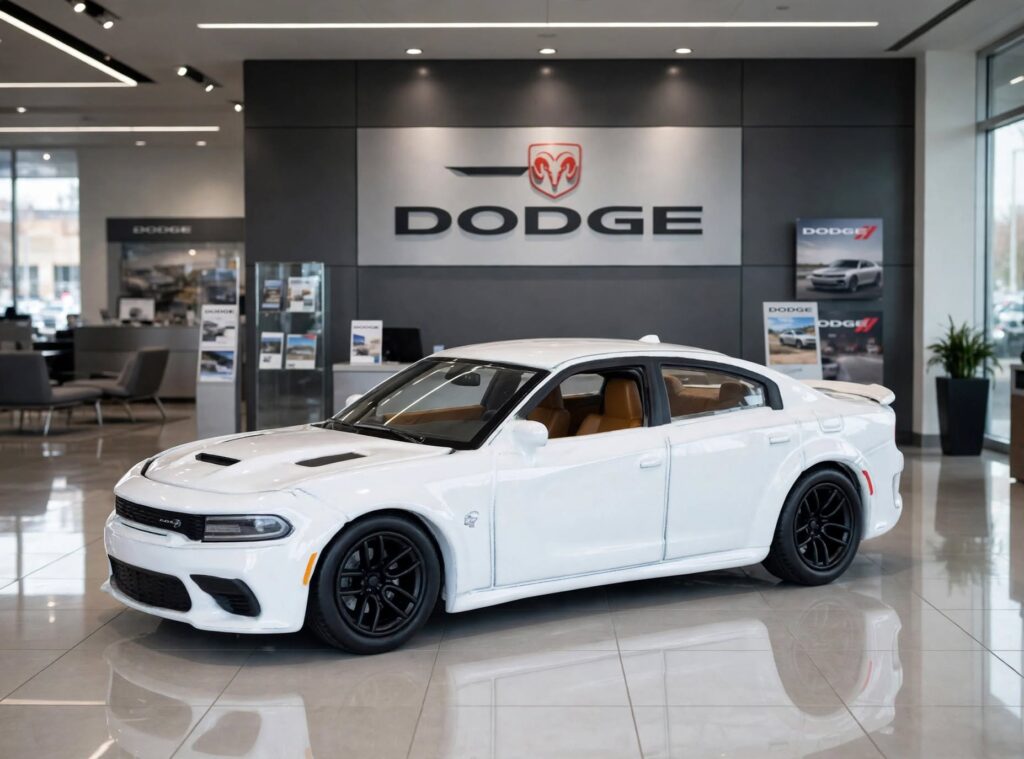
It occupies the loud end. Where one Detroit rival built the shapes that define the hot rod tradition and another supplied the pickups and the family cars, this one has spent sixty years making the most aggressive version of whatever segment it entered.
That is useful on a shelf, because it gives you a clear point of contrast. Put a Dodge next to the equivalent model from Ford and the difference in attitude is visible before you read a single badge. For the wider map of manufacturers in this hobby, see my car brand manufacturers page.
Who founded Dodge?
Horace and John Dodge, two brothers who began with bicycles in Detroit and then built mechanical components for other carmakers before producing their own car in 1914.
Did Dodge own part of Ford?
Yes. The brothers took equity in Ford Motor Company as part of their supply arrangement, and a dispute over dividends led to a landmark court case before Ford bought them out.
Who owns Dodge now?
The brand sits inside a large multinational group. It has passed through several corporate owners since Chrysler acquired it in the late 1920s.
Which Dodge is most common in diecast?
The Charger, by a very wide margin, mostly in its late sixties form and its modern revival, helped by decades of film and television appearances.
Is Ram part of Dodge?
The trucks were sold under the Dodge name for decades before being separated into a brand of their own, so older castings and newer ones carry different badges for the same lineage.