If you own one muscle car casting, there is an argument that it should be this one, because every other muscle car exists partly because of it.
How the GTO happened
General Motors had an internal rule limiting engine size in its intermediate cars. Pontiac worked around it by offering the large engine as an option package on the Tempest rather than as a model in its own right, which technically complied while defeating the purpose entirely.
The package sold far beyond expectations, every rival scrambled to copy it, and the formula became a category: mid size body, large engine, aimed at young buyers.
That is the muscle car recipe, and it exists because somebody found a gap in a corporate rulebook.
The 1965 restyle
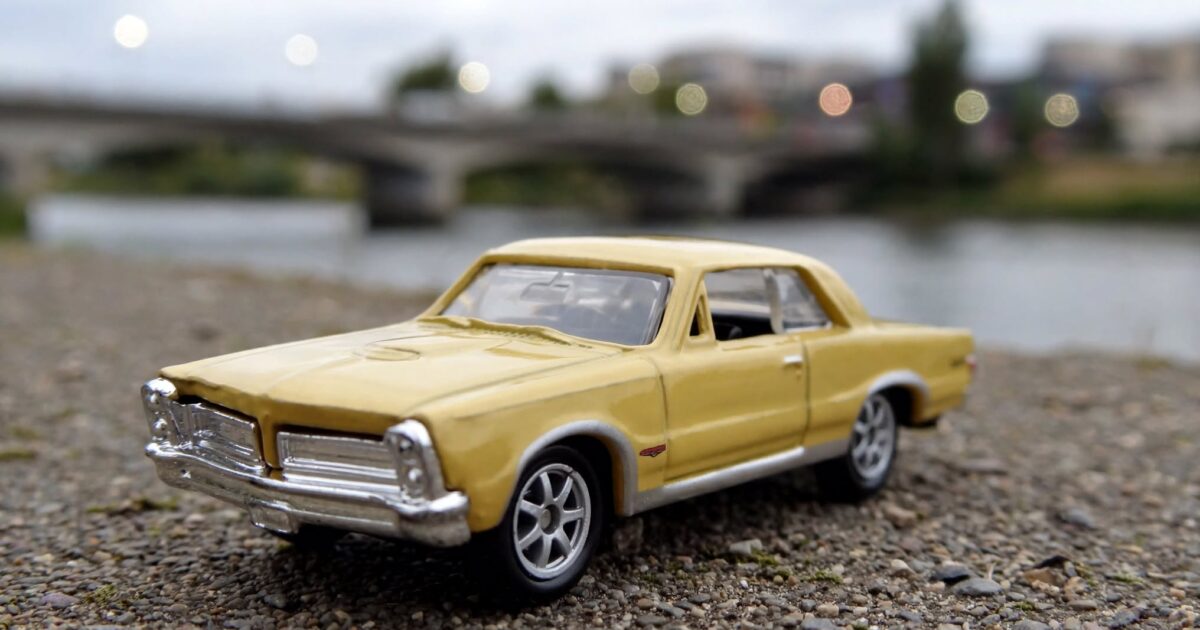
The first GTO was a clean but conventional shape. For 1965 Pontiac restyled it with vertically stacked headlights, which is the detail that makes this year instantly recognisable.
Stacked lights were a brief fashion and they date the car precisely. They also give the front end a narrow, aggressive look that the wider horizontal arrangement never achieved.
On this casting they are moulded into the front wings with chrome surrounds, and the split grille between them is correct. Pontiac used a divided grille as a brand signature for decades and getting it wrong ruins the face.
Yellow paint and restraint
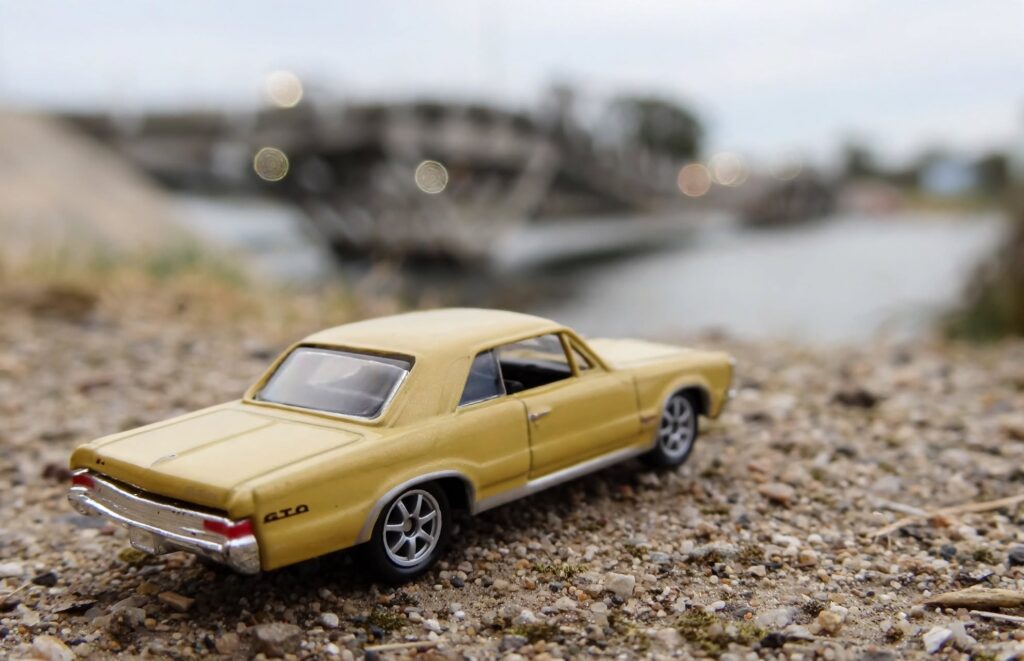
There are no stripes, no flames and no graphics. A solid yellow body, chrome bumpers, a small GTO badge and nothing else.
That is historically correct. The first GTOs were deliberately understated, because part of the appeal was that they looked like ordinary intermediates until they moved. Stripes and graphics arrived later, once manufacturers realised buyers wanted to be seen.
Yellow also does something useful on this body. The GTO has subtle surfacing along the flanks and a light colour shows it, where a dark one would flatten the car into a silhouette.
The bonnet carries the twin scoops moulded in, which is correct for the model.
Welly on a well known subject
The proportions are right, which is the main thing. A GTO is a specific size and shape, and anyone who knows the real car spots an error immediately.
Ride height is realistic, the chrome is properly finished rather than painted, and the badges sit where they belong.
The wheels are the familiar complaint. Generic multi spoke chrome on a car that should wear either steel wheels with caps or the specific Pontiac designs of the period. It is the single change that would lift this casting substantially.
Stacked headlights and dating a casting
Quad headlights stacked vertically instead of side by side were a brief fashion in the mid sixties, and they are one of the most useful dating tools available.
Several manufacturers used the arrangement for a few model years and then abandoned it, so a car wearing stacked lights sits inside a narrow window regardless of what a listing claims.
The same logic applies to other short lived features: hidden headlights, split rear windows, wraparound windscreens. Learning three or four of these lets you date most American castings from a photograph without reading the description.
Buying a loose GTO
The stacked headlight surrounds are chrome, small and at the front corners of the car, which makes them the first thing to scuff. They are also the feature that identifies the year, so damage there costs more than damage elsewhere.
Then the split grille, which collects dust and takes impacts.
Then the bonnet scoops, which are raised.
Yellow shows dirt far more than damage. A grubby looking GTO in a listing photo is usually fine, so ask for a clean shot rather than negotiating the price down over what is probably dust.
Pontiac as a dead division
Pontiac closed during the reorganisation that followed the 2008 financial crisis, which puts it in the same category as Mercury, Oldsmobile and Plymouth.
For collectors that changes things in a small but real way. A brand that no longer exists cannot release new models, so the catalogue of real cars is closed and every casting refers to something finished.
It also means the badges carry a date stamp. A Pontiac is necessarily from before a certain point, which is not true of a Chevrolet or a Ford.
A shelf built from dead divisions ends up documenting corporate history as much as automotive design, and the cars are cheap because the audience for them is shrinking.
Starting a muscle shelf with the GTO
Most people start with a Mustang or a Camaro because those are the famous ones. Starting with the GTO sets the story up properly instead.
The GTO comes first chronologically and causally, so everything you add afterwards arrives as a response to it. A Chevelle, a Charger, a Cyclone and a Road Runner all make more sense when the car that prompted them is already on the shelf.
It also costs nothing, because the GTO is nowhere near as chased as the pony cars.
Final call
Correct proportions on the car that invented the category, in a period of accurate undecorated finish, with the stacked headlights that date it to a single model year. The wheels are wrong, as usual at this price. Buy it first and build the shelf around it.