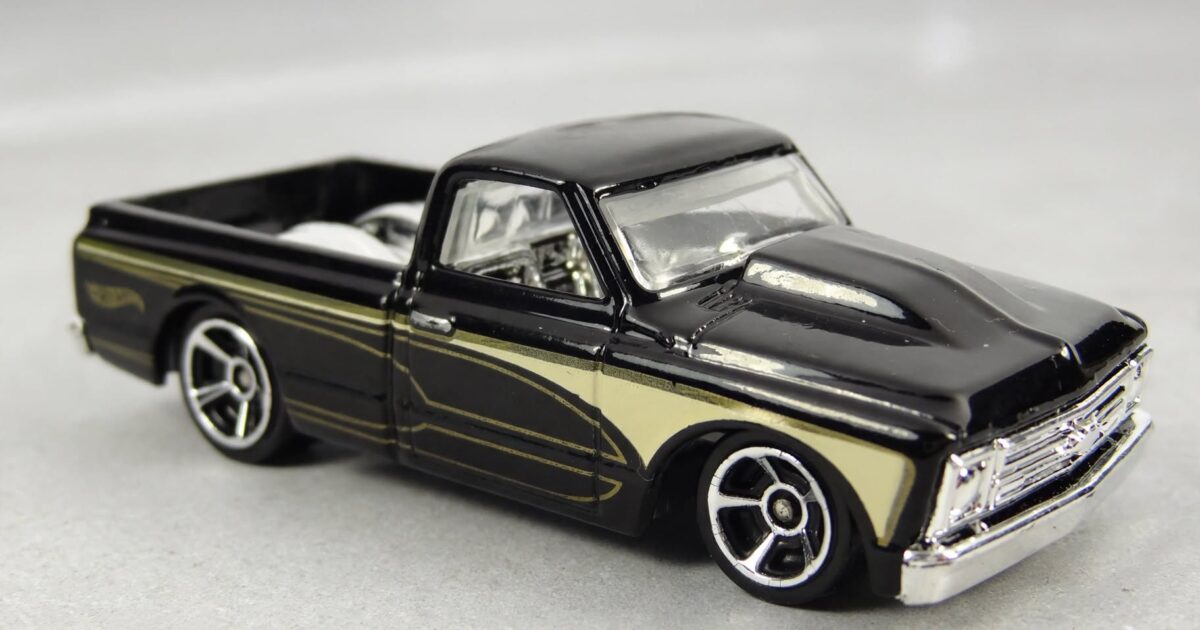
Black paint, cream panels, fine gold pinstriping and a bonnet scoop. This is not a working truck and it has not been one for a long time.
The 1967 C10 is the pickup that the custom scene adopted and never gave back, and this casting is dressed exactly the way those trucks get dressed.
Why the C10 gets customised more than any other truck
The 1967 to 1972 generation is the one everybody wants, and the reason is the bodywork. Chevrolet smoothed the sides, lowered the beltline and gave the cab a wraparound rear window on some versions, which made the truck look more like a car than any pickup before it.
That smoothness is what attracts customisers. A slab sided truck with minimal ornamentation is a blank surface, and blank surfaces invite paint.
The other reason is practical. These were built in enormous numbers and parts are still available, so people modify them because they can afford to.
The paint scheme in detail
Black over the main body, with cream panels filling the lower front wing and the area behind the cab door, separated by fine gold pinstripe lines that follow the panel shapes.
The pinstriping is the part worth studying. Those lines are thin, they curve, and they have to stay parallel to the panel edges without wandering. Printing that at this scale is difficult and it is the first thing that goes wrong on a cheap casting.
Look at where the gold line crosses the door shut and it holds true. That is the tell for whether a manufacturer took the deco seriously.
There is a Hot Wheels logo on the rear bed side, small and tucked away rather than plastered across the door.
The scoop and the lowered stance
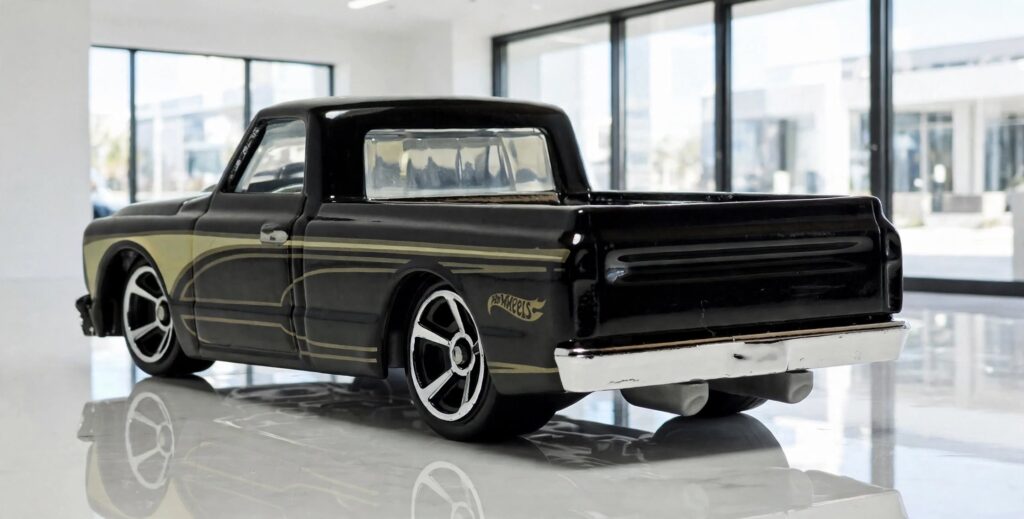
The bonnet carries a raised forward facing scoop, moulded into the panel rather than added as a separate piece. On a custom truck that scoop signals that something has been done to the engine.
The stance is low. The body sits close to the ground with the wheels filling the arches, which is the correct treatment for this subject and the opposite of what a Jeep needs.
Through the windscreen you can see a chrome engine sitting high in the bay, visible because the interior is open and the glass is clear. That is more detail than most mainline trucks carry.
Custom trucks against working trucks
I reviewed a Matchbox GMC a while back that sits at the opposite end of this spectrum: realistic height, correct wheels, a fleet livery and a load in the bed.
Both are pickups and they are completely different objects. One is a vehicle doing a job. The other is somebody’s project, built to be looked at.
Owning both is the interesting move, because side by side they show you what the custom scene actually changes. Height, wheels, paint, and the addition of things that serve no purpose except to signal effort.
Judging pinstriping on any casting
Since this C10 lives or dies on its lines, here is how to assess printed pinstriping generally.
Check where a line crosses a panel gap. Printing over a recess is where registration errors show, and a line that jumps or thins there was applied carelessly.
Check whether the lines stay parallel to the body edge they follow. Pinstripes that drift away from the panel shape look wrong even to people who cannot say why.
Check the ends. Good pinstriping tapers or finishes at a deliberate point. Bad pinstriping just stops where the printing pad ran out.
Buying a loose C10
The pinstriping is the vulnerability. Fine gold lines on a black body at handling height, which is the worst combination available. Check both flanks under angled light before anything else, because a broken pinstripe is very visible and cannot be repaired.
Then the chrome front bumper and grille, which sit at the front of a truck that is low enough to scrape.
Then the bed. Look inside and check the top edges of the bed sides.
Black paint shows scuffing rather than chips. Use soft light from the side and look across the bonnet and the roof for a continuous gradient, not a hard white streak.
Why this generation is the expensive one
Worth knowing if the casting sends you looking at real trucks, because the prices will surprise you.
The 1967 to 1972 C10 went from being a cheap work vehicle to being one of the most sought after American trucks of any era, and values followed. Clean examples now cost more than plenty of muscle cars from the same years.
The reasons are the ones that usually apply: a shape people like, enough parts availability to make restoration realistic, and a custom scene that adopted it and never let go.
For a collector at 1:64 that is good news. The casting costs pocket money and the real thing does not.
Sixties and seventies trucks as a shelf
Pickups from this era are among the cheapest interesting things you can collect, because the trucks themselves were built in huge numbers and the castings follow.
What makes a shelf of them work is variety of treatment rather than variety of model. A stock truck, a custom, a lowered one and a lifted one say more together than four different models all done the same way.
This C10 covers the custom end of that range about as well as a mainline casting can.
My honest take
Genuinely good pinstriping on a subject that deserves it, with a moulded scoop and a stance that suits the custom treatment. The black paint needs careful inspection and the gold lines are unrepairable if damaged. Worth buying, worth checking properly first.