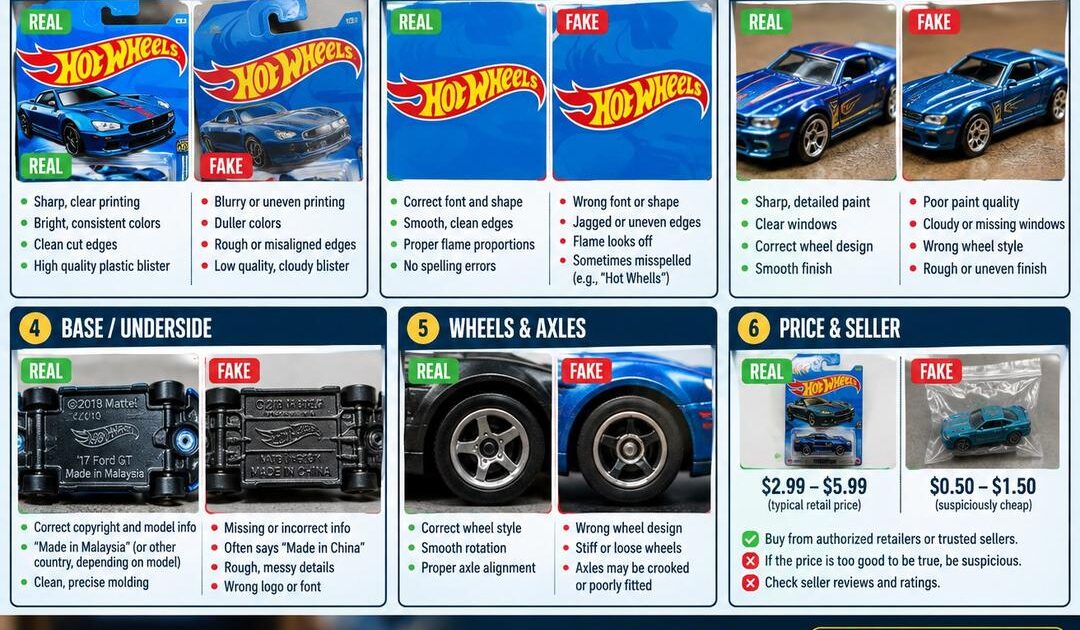
Nobody counterfeits a dollar car. It is not worth the effort.
What happens instead is subtler: a common car dressed up as a scarce one, a repaint sold as original, a mainline described as premium. The deception sits in the description more often than in the object.
Here is what to check, in the order worth checking it.
Start with the price, not the car
If something is listed well below what that car normally sells for, that is information.
Sellers who have a genuinely valuable car know it. A listing at a third of the going rate usually means the seller knows something you do not, or the car is not what the title says.
Before anything else, look at completed sales for the same car. Not asking prices, which are fiction, but what people actually paid. If the number does not line up, find out why before bidding.
The base is the first physical check
Turn the car over, or ask the seller to.
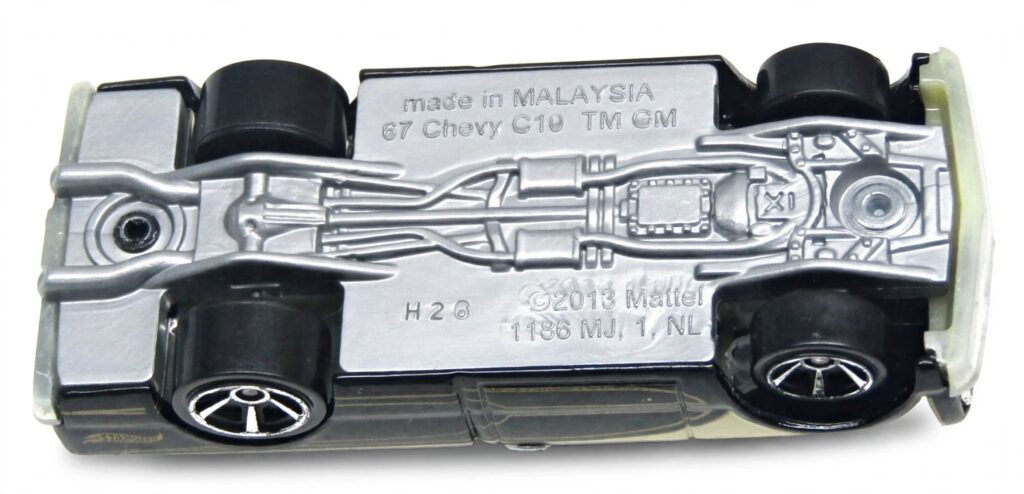
A genuine casting has a base with crisp lettering: the manufacturer, the model name, a copyright year, a country of manufacture. The text is moulded, not printed, and the edges are sharp.
Soft, shallow or blurry lettering is a warning. So is a base where the text does not match the car on top of it.
Any listing at collector prices that does not show the base is a listing to ask questions about. There is no reason to withhold that photograph.
Repaints: the most common deception
This is the one that catches people, because a repaint is a real car underneath.
Original factory paint is thin and even. The surface follows the moulded detail without filling it in, panel lines stay sharp, and the colour goes right up to the edges without pooling.
Repainted cars tend to show the opposite. Soft panel lines where paint has filled the recesses, a slightly thick look at the edges, and overspray where the body meets the base or the glass.
Check the inside of the wheel arches and the underside of the body edges. Those are the places a repainter misses, because they are awkward to mask and nobody looks there.
Swapped wheels
Wheel swapping is routine in this hobby, done openly by customisers and dishonestly by sellers.
The reason it matters is that wheels are part of what identifies a specific release. A car with the correct body in the correct colour but the wrong wheels is not the release it is being sold as.
What to look for: wheels that sit at an odd height, axles that are not centred in the arches, or marks around the base rivets where someone opened the car.
A car that has been opened and reassembled usually shows it at the rivet posts. Those are meant to be deformed once at the factory and never touched again.
Fake chase cars
Treasure Hunts and Super Treasure Hunts carry specific markings, and faking those markings is easier than faking a whole car.
The honest advice here is to learn the identifiers rather than trust a description. Our guide to Treasure Hunts versus Super Treasure Hunts goes through what each one actually carries.
Then check that everything matches. A real chase car is a package: the right casting, the right wheels, the right paint type and the right markings together. A seller adding one element to a common car usually gets the others wrong.
Premium described as mainline, and the reverse
Less malicious and very common.
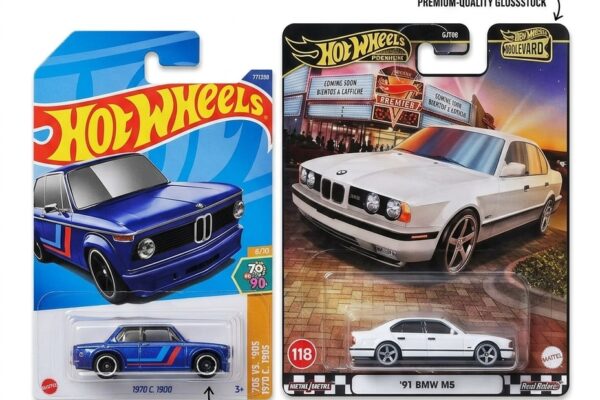
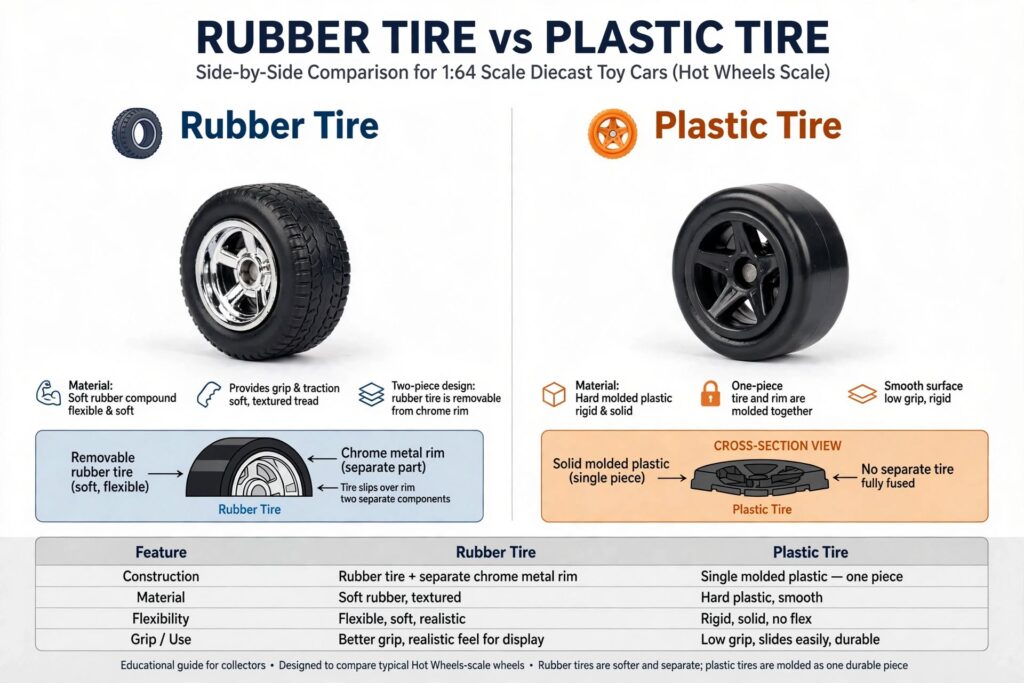
The two are easy to separate once you know the tells: premium cars have rubber tyres and a metal base, mainline cars have moulded plastic wheels and a plastic base. Our guide to mainline versus premium covers the differences in detail.
Those two checks are conclusive. Ask for a photo of the underside and a close shot of a wheel and you have your answer, regardless of what the title claims.
Reboxed and resealed cards
For anything sold sealed, the packaging is part of what you are buying, and packaging can be tampered with.
Look at the blister edges where the plastic meets the card. Factory sealing is even all the way round. A resealed card often shows glue, lifted edges or a slightly different plastic colour where it has been worked on.
Check whether the car inside matches the card art and the printed name. A mismatch is conclusive.
And be wary of a mint card holding a car with handling marks. Those two things do not normally go together.
The photographs to ask for
If a seller is asking real money, these four are reasonable requests. A seller who refuses all of them is telling you something.
- The base, straight on and in focus
- One wheel close up, showing whether the tyre is rubber or moulded plastic
- The car under soft side light, which reveals paint texture that overhead light hides
- The rivets underneath, showing whether the car has been opened
None of this is unreasonable, and the answer you get matters as much as the photos.
Frequently asked questions
Are there fake Hot Wheels cars?
Outright counterfeits are rare because the cars are cheap. The common problem is misrepresentation: repaints, swapped wheels and common cars sold as scarce ones.
How can I tell if a Hot Wheels has been repainted?
Look for paint filling the panel lines, a thick edge where the paint meets the base, and overspray inside the wheel arches.
How do I know if a Hot Wheels has been opened?
Check the rivet posts on the underside. Factory rivets are deformed once and show no tool marks.
Can you tell a fake Treasure Hunt from a photo?
Often, if the photo is good enough. A genuine chase car matches on casting, wheels, paint and markings together, and fakes usually get at least one wrong.
What should I ask a seller before buying?
A photo of the base, a close-up of a wheel, and a shot taken under soft side light. Those three cover most of what goes wrong.