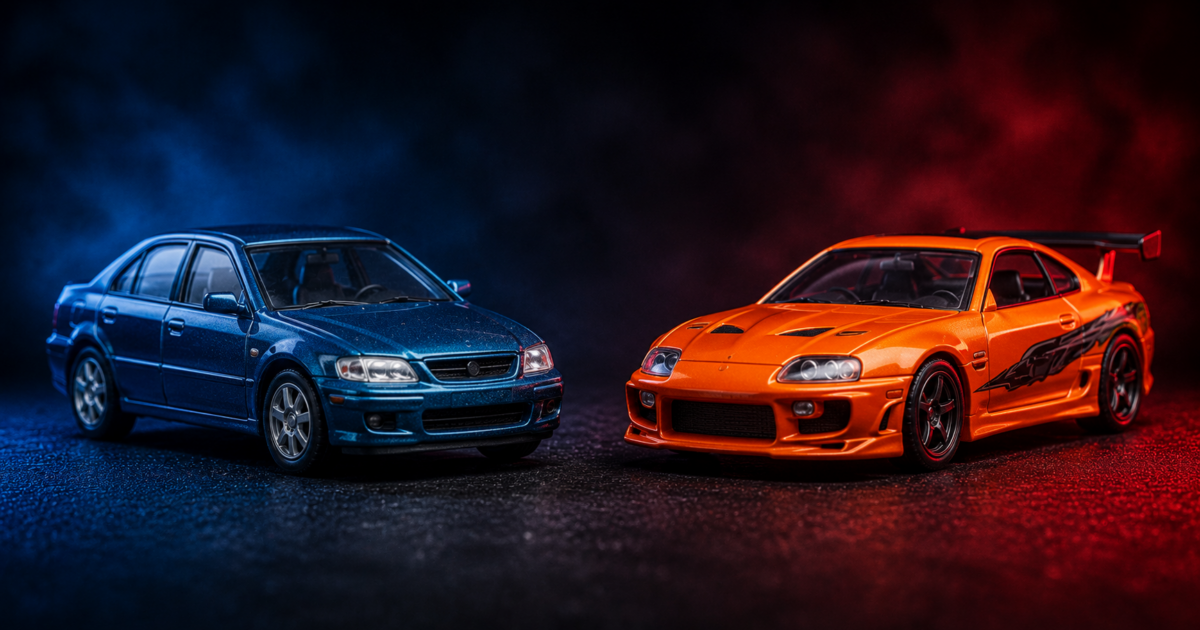
Sooner or later every diecast collector hits the same fork in the road: Matchbox or Hot Wheels? They share an owner and they sit at the same pocket-money price, so people assume they are basically the same toy in different packaging. They are not. They scratch different itches, and knowing which itch is yours saves you a lot of wasted shelf space.
Same company, different DNA
Matchbox came first, born in England in 1953 under a company called Lesney. The name came from the little boxes the cars were sold in. Hot Wheels arrived fifteen years later, in 1968, out of California, with louder styling and wheels built to actually roll fast down a track. Mattel bought Matchbox in 1997, so today one company owns both, yet the two brands have kept very different personalities through all of it.
What each brand is famous for
Hot Wheels made its name on speed and imagination. The original 1968 Redlines were built to scream down orange track, and ever since the brand has leaned on muscle cars, hot rods, wild fantasy castings and licensed exotics, topped off by the collector-focused Red Line Club. Matchbox built its reputation on the everyday and the useful: its long-running numbered range covered cars, yes, but also lorries, buses, tractors and emergency vehicles, the working machinery of real life. Matchbox even answered Hot Wheels in 1969 with its faster Superfast wheels, which tells you how seriously it took the fight. If you love vehicles that do a job, Matchbox has always spoken your language.
Realism versus fantasy
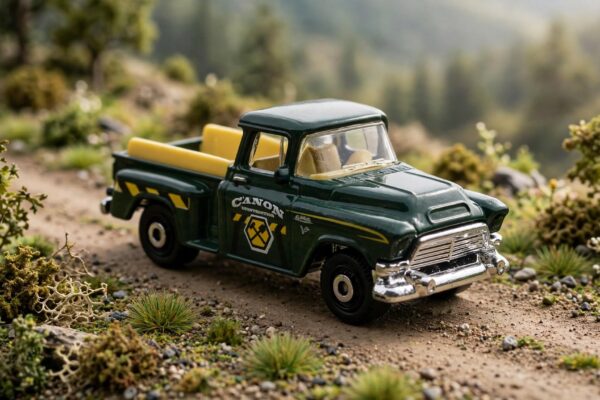
This is the heart of it. Matchbox leans hard into realism: accurate proportions, real-world liveries, and that deep bench of commercial vehicles Hot Wheels barely bothers with. Hot Wheels leans the other way, toward fantasy and speed, with stylized castings, bold graphics, and a healthy share of cars that never existed outside a designer’s sketchbook. Neither approach is better. They just want different things from a little metal car.
Build and feel
Pick one of each up and you can feel the difference in philosophy. Hot Wheels wheels and axles are tuned to roll fast, which is great on track and a little toy-like up close. Matchbox tends toward more realistic wheels and ride height, so its cars sit and look more like the real thing standing still, even if they would lose a race down the kitchen table. Once you notice it, you cannot unnotice it.
Variety and how easy they are to find
Hot Wheels wins on sheer scale. There are far more castings, far more new releases every year, and you will find them on pegs almost everywhere. Matchbox runs a smaller, more focused range and can be genuinely hard to find in some markets, which is part of why certain Matchbox models hold their value. Scarcity does that. If you like the thrill of a hunt where the shelves are not always full, Matchbox delivers it whether you wanted it to or not.
The premium tiers
Both brands court adult collectors now, and this is where the gap narrows. The Matchbox Collectors series brings rubber tires, better paint and licensed real cars, and it goes head to head with Hot Wheels Car Culture and Boulevard. If your only experience is the cheap mainline of either brand, the premium tiers feel like a different hobby. They cost more, but you can see and feel where the money went.
Value: loose or carded?
One practical note that catches new collectors out. Like most diecast, these cars lose a big chunk of collector value the moment they come off the card. If you collect to enjoy and display, that does not matter at all, and loose is cheaper anyway. If you lean toward value, keep the rare ones sealed, and keep them away from sun and damp, which ruin cardboard faster than you would think.
So which should you collect?
Here is the honest answer most veterans land on: both. Almost everyone who sticks with the hobby ends up owning a pile of each. If you love variety, custom styling and the rush of Treasure Hunt hunting, start with Hot Wheels. If you want models that look like the cars and trucks parked on your street, start with Matchbox. And if realism is the thing pulling you in, do not stop at Matchbox, because Majorette deserves a serious look too. Brand new to all this? The beginner’s guide will help you pick a lane before you spend a peso.